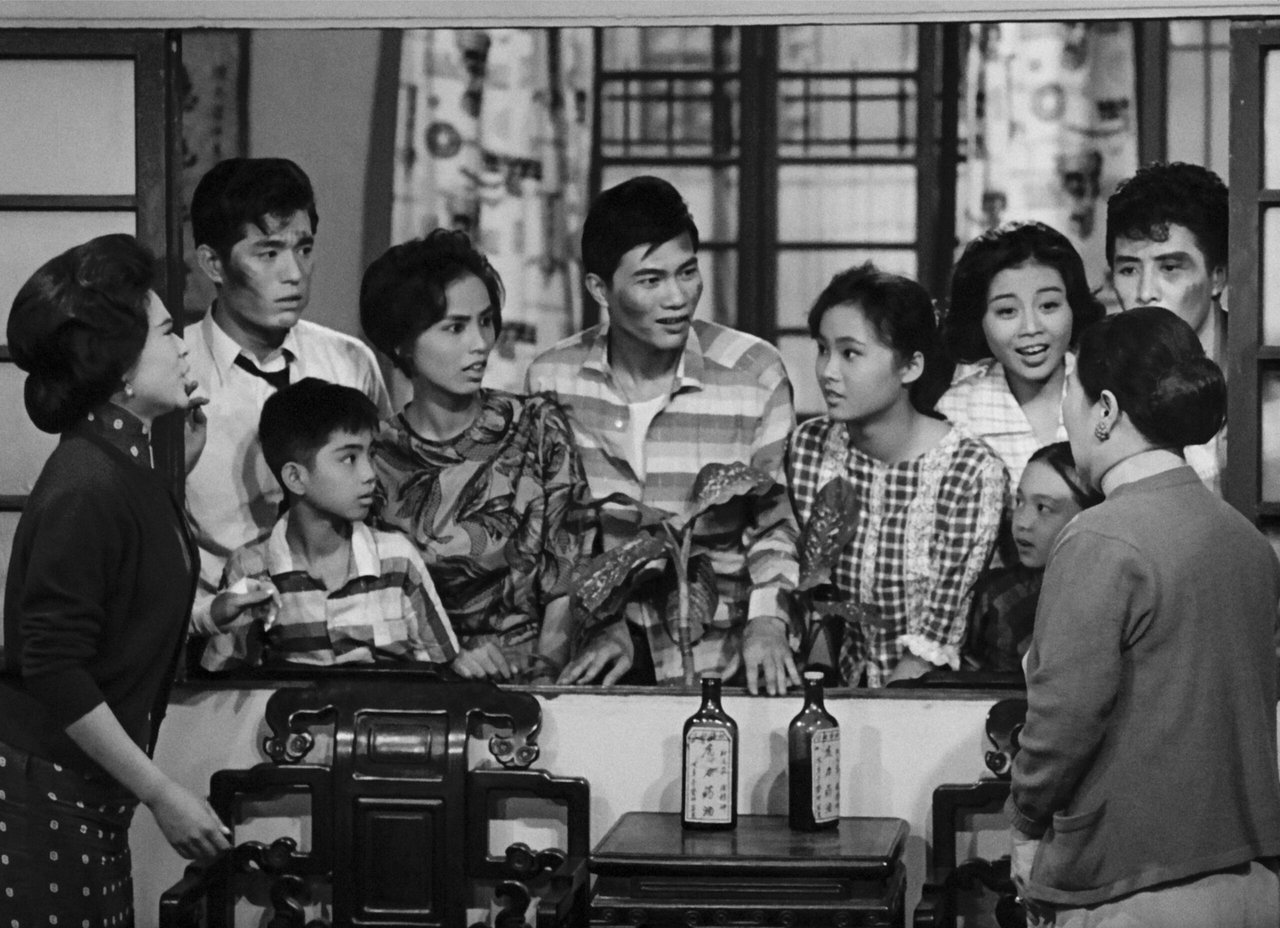
The restoration of Lee Hsing’s Good Neighbors provides a tantalizing glimpse of a past era. What proves remarkable is how the film still holds up over half a century later as a comedy, even if we may now be keenly aware of what the movie leaves out.
Good Neighbors is a classic of taiyupian, Taiwanese-language cinema produced mostly in the 1950s and 1960s, after the KMT assumed control of Taiwan. There has been a renewed wave of academic interest in taiyupian, which number over one thousand, in the last decade. This interest arises in how, through a modern standpoint, it seems surprising that the KMT would allow Taiwanese-language to be produced in the 1950s and early 60s—when decades of repression aimed at stamping out Taiwanese Hokkien and enforcing Mandarin followed.
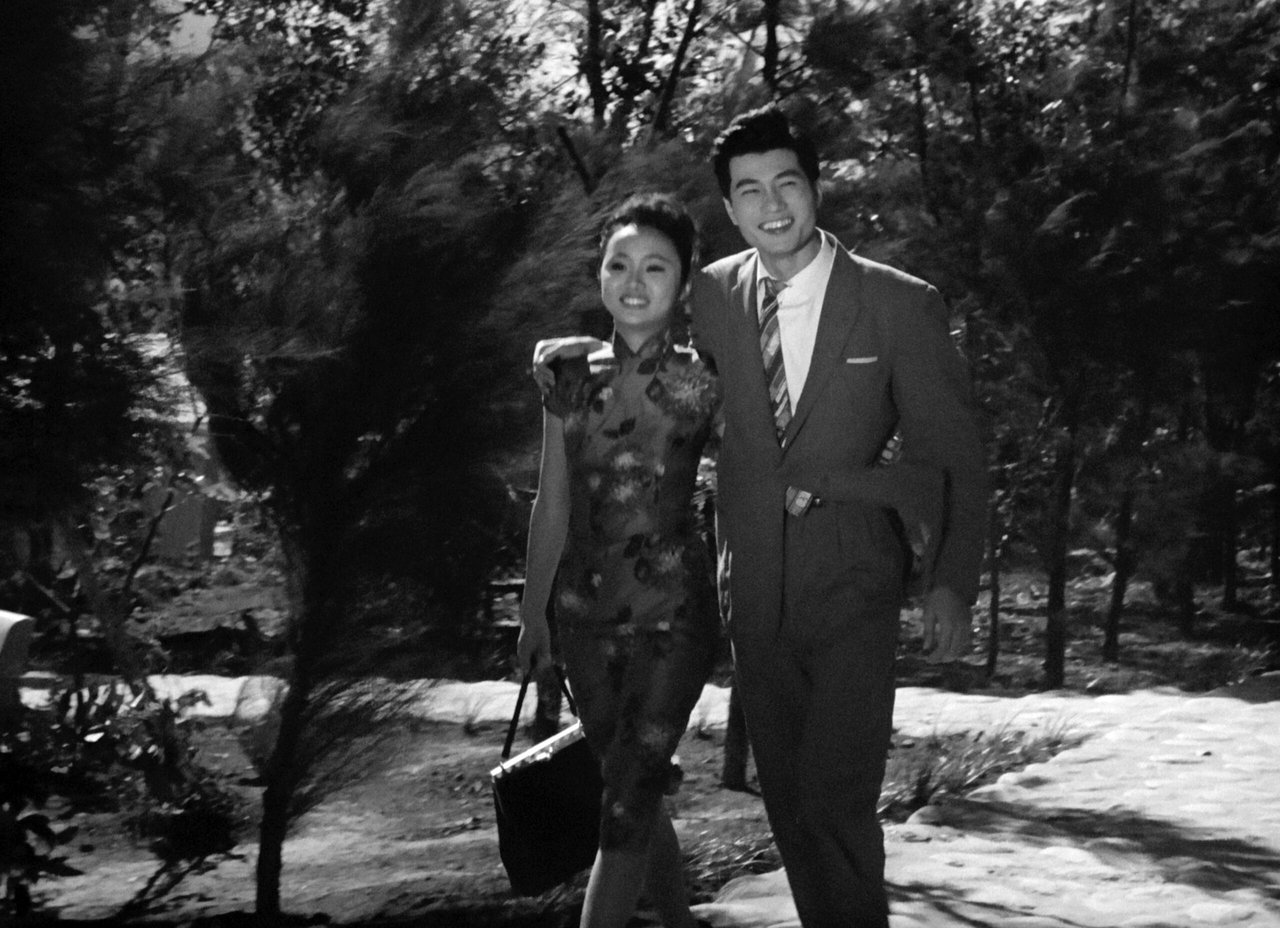
Good Neighbors follows two families, the Chens and the Ngs, the former of which are waishengren and the latter of which are benshengren. The two families are set up as parallels, in that both have children who are of marriageable age. Adding to the parallels is that the Ng family patriarch is a doctor trained in Western medicine, while the Chen family patriarch is a doctor trained in Chinese medicine.
This, then, sets the stage for the conflict that eventually breaks out between the two families—one complicated by their inability to understand each other, due in part to linguistic confusion between Taiwanese Hokkien and Mandarin. Even as the parents of both families find themselves increasingly at odds with each other, the children of the two families are romantically attracted to each other. As one might expect, things are eventually settled with a happy marriage.
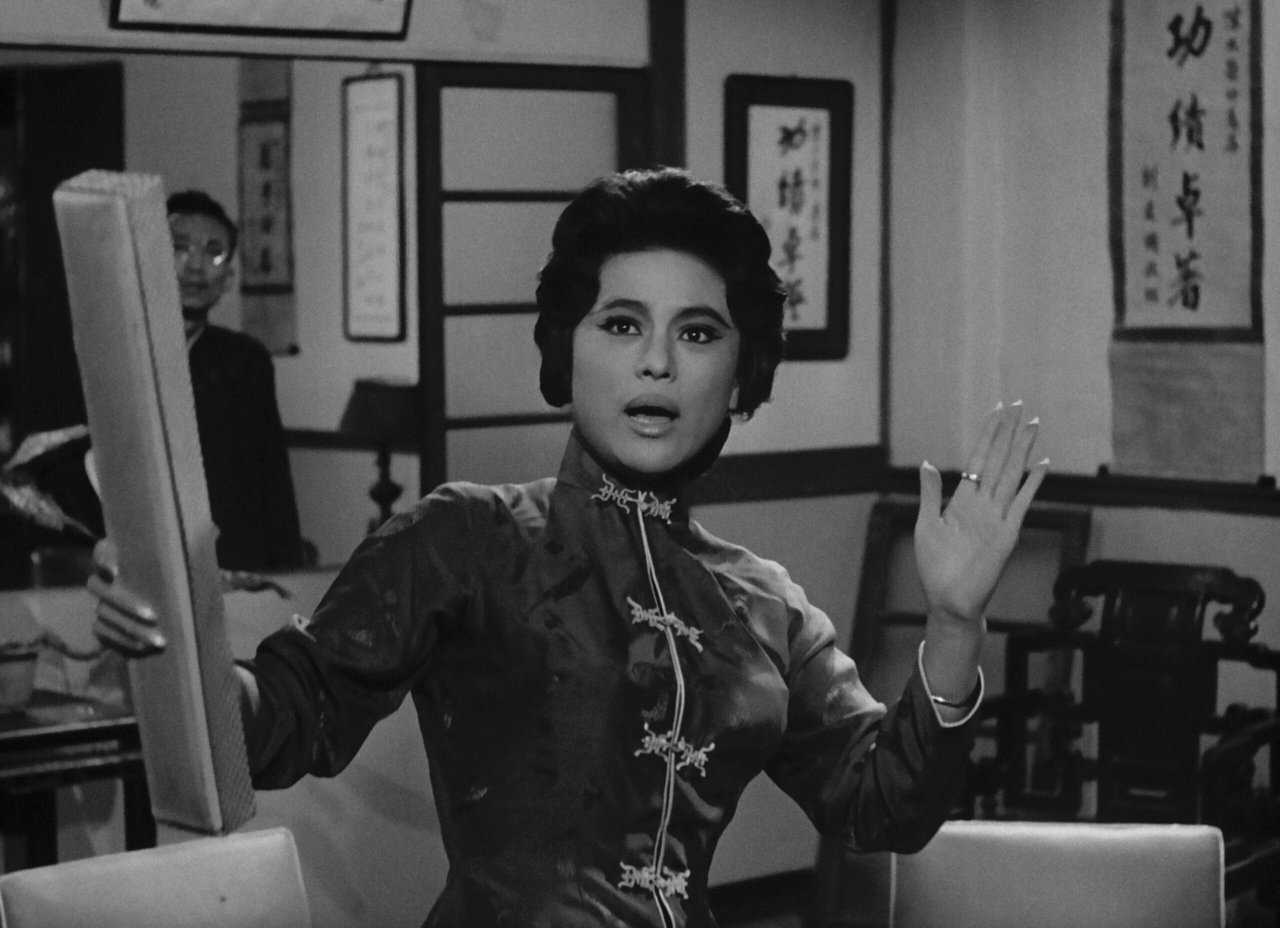
From Good Neighbors, then, one can see the inter-ethnic tensions that existed in the post-WWIIperiod between waishengren and benshengren. Good Neighbors, as a state-sanctioned film, gestures toward such tensions while ultimately smoothing them over. In the end, as the movie frames it, everyone becomes one happy family—after all, everyone is Chinese. This was, of course, not the case in reality, in which the KMT’s authoritarian control of Taiwan was maintained through many years of bloody repression.
Still, setting this aside, Good Neighbors is a capable comedy, and the movie proves a valuable historical text. Consequently, the movie is highly worth a watch, as it provides a look into the past. Even as we now might be unable to look at Good Neighbors simply as a work of comedy without noting its dimensions as a propaganda film, it is an emblematic work of the times.
• • •

Good Neighbors (Chinese: 兩相好)—Taiwan. Dialog in Taiwanese Hokkien and Mandarin. Directed by Lee Hsing. Running time 1hr 34min. First released 1962. Starring Wei Pingao, Hu Dou, Mu Hong, Yang Yuefan, Wang Man-chiao.
This article is part of Cinema Escapist’s dedicated coverage of the 2026 San Diego Asian Film Festival.
This article is also published in No Man Is An Island, an online publication focused on the connections between everyday life and politics. No Man Is An Island is brought to you by the team behind New Bloom Magazine.