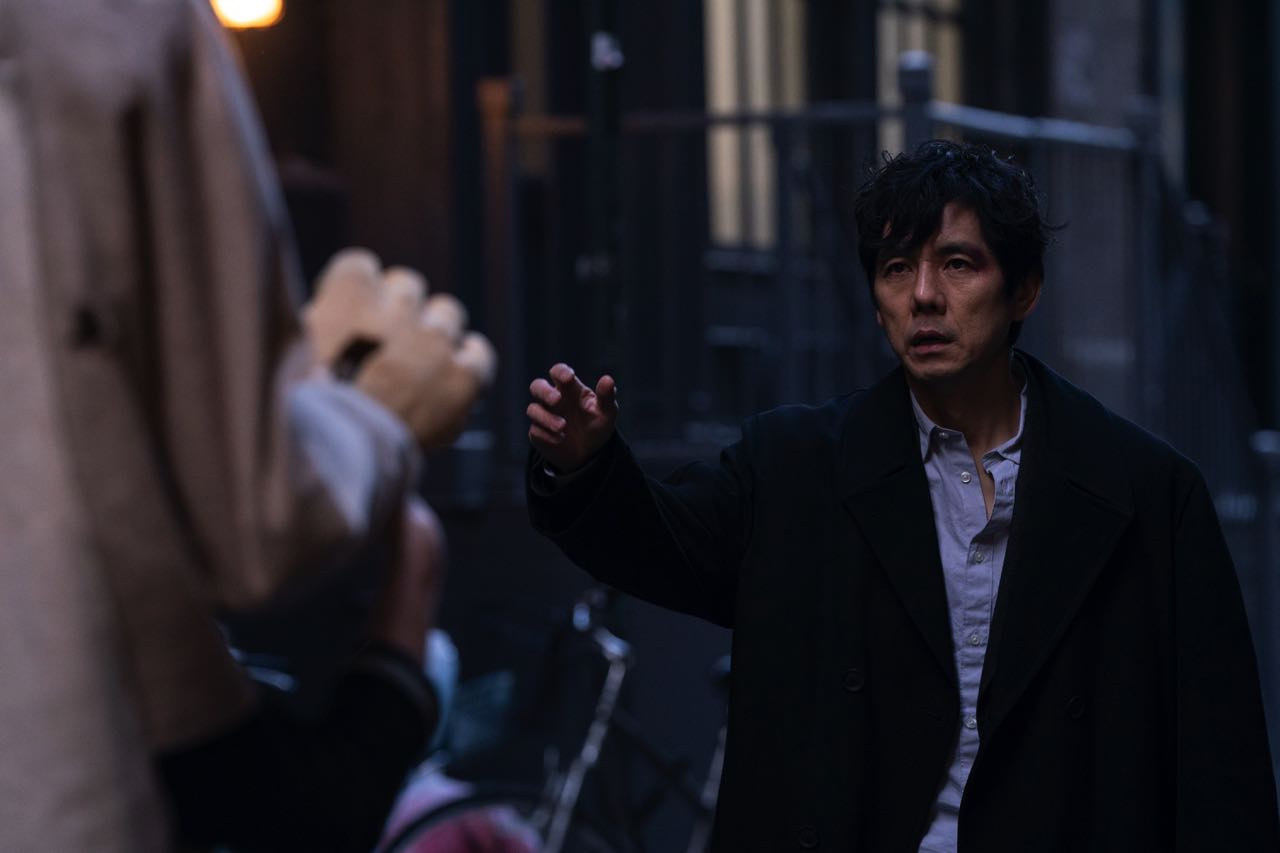
Despite a strong premise, Dear Stranger ultimately does not deliver. Part of this can be attributed to the failure of director Tetsuya Mariko to adequately research the topics of his film. However, narrative inconsistencies also present major challenges.
Dear Stranger follows a Japanese-Taiwanese couple, Kenji and Jane, who have a child named Kai. Kenji is a professor of architecture teaching at what appears to be Cooper Union in New York City, while Jane is a theater director who occasionally works at her family’s convenience store.
The two already have disagreements and marital problems linked to their busy careers and the challenges of raising Kai. Such issues are thrown into high tension when Kai is kidnapped by Donovan, an acquaintance of Kenji’s who is an ex of Jane’s.
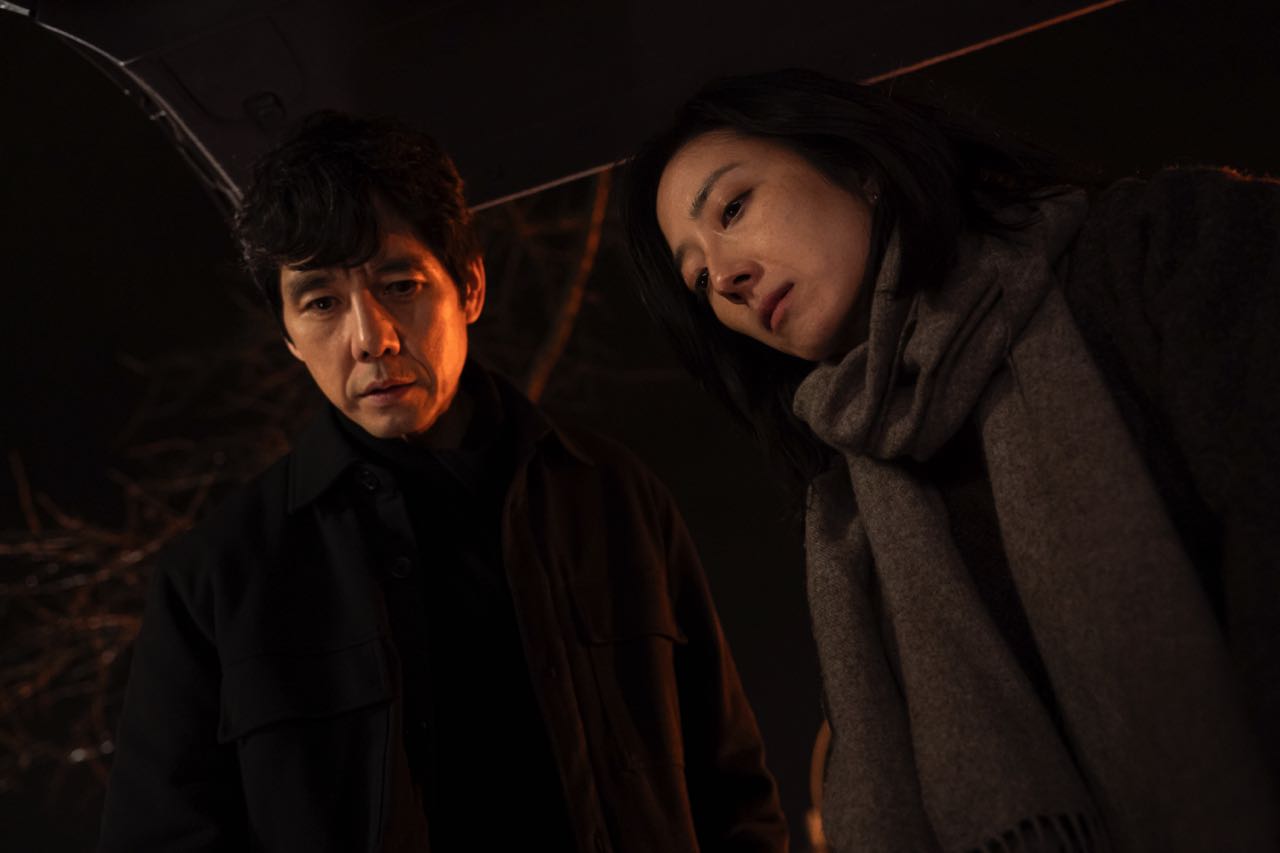
The film puts the issue of language front and center, in that Kenji and Jane are in a relationship but communicate with each other in English–neither of their native languages. Rather dramatically, the movie begins with Kenji lecturing about the fall of the Tower of Babel and the dissolution of architecture into ruins as it is linked with the rise of language.
Still, Dear Stranger fails to be realistic to anyone who has ever been in a relationship in which neither partner speaks their native language, or who was raised in a family where both parents communicate in a language that is not their native one. Dialogue between Kenji and Jane rarely ever sounds like how a multicultural couple interacts, but almost always sounds more like sample sentences from a textbook. While Hidetoshi Nishijima, playing Kenji, and Gwei Lun-mei, playing Jane, bring their considerable acting prowess to their roles, they can only carry their roles so far with their abilities.
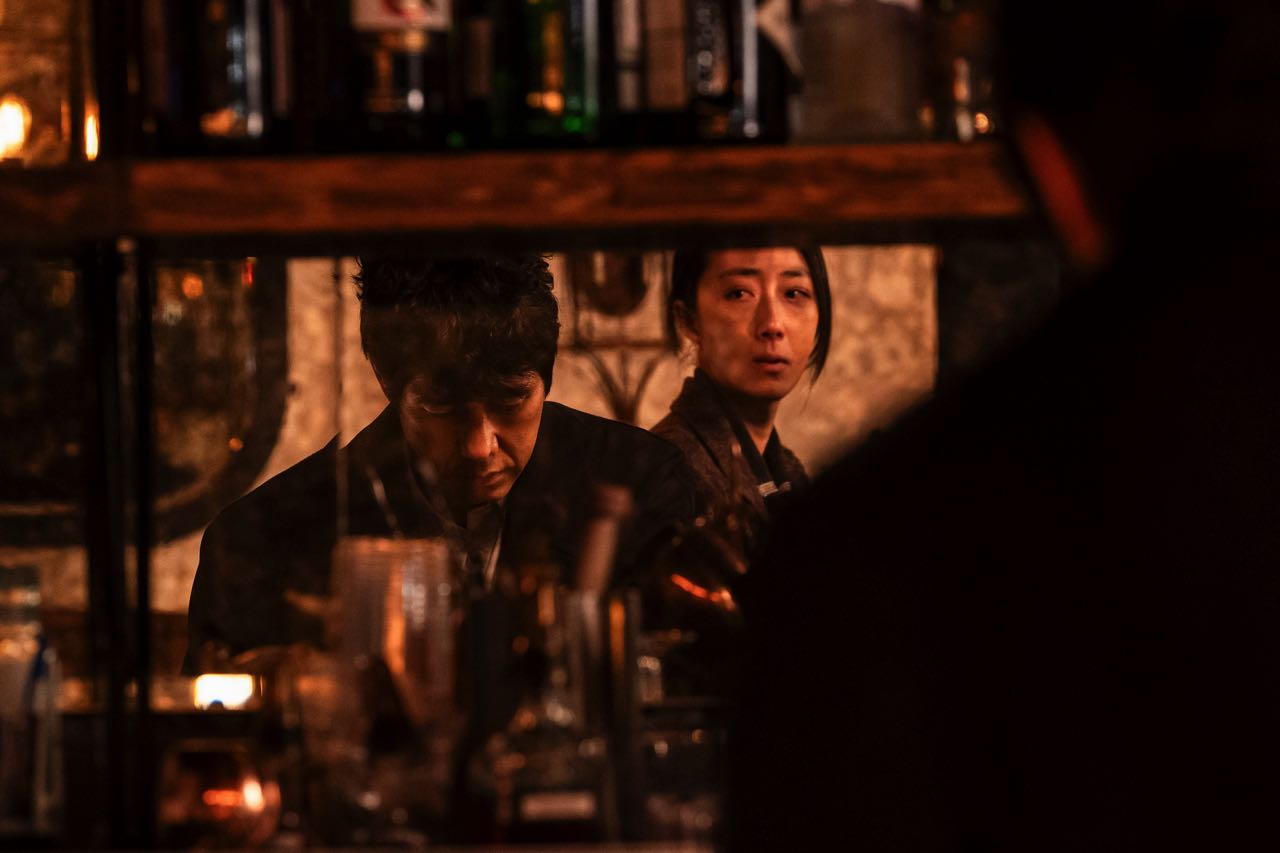
It is probable that director Mariko felt overconfident about his English ability. Characters in the movie who are native English speakers similarly communicate with excruciatingly bizarre dialogue. Mariko seems to still have the linguistic dynamics of the Japanese language in mind in his script, even when writing in English in an American setting. It comes off as highly odd, for example, at one point when an NYPD detective talks about the need to find someone to “take responsibility”—as a Japanese cop might, but an NYPD detective is very unlikely to.
To this extent, Mariko exoticizes the movie’s American setting, seeing America as a land of rampant crime, violence, and poverty, in which people eat off the floor when they drop food. But this, too, comes off as illogical, in that there is little explanation for the many random acts of violence that the movie’s main characters encounter, except that this seems to be how Mariko views America.
And there are many points in the movie where it is clear Mariko fails to do research about his setting. Kenji, for example, is a character who is a fifth-year tenured professor, but he has somehow never met the dean of his university, and acts as though he is a very junior staff member. At a dramatic moment when Kenji delivers a lecture, the movie suddenly veers into melodrama, making the viewer feel that Mariko has probably never attended any lecture on architecture whatsoever in his life. At another point, the characters reference guns sold on the “black market”, Mariko seemingly unaware of how America is awash with easily available firearms for even those without gun licenses.

Mariko fails to make effective use of his characters, making little use of Donovan and providing the audience with little insight into his character. And many details are incoherent. Jane is introduced working at a convenience store to allow for a robbery scene at that store, but this is an incidental detail, and she is never shown again working at that convenience store. Donovan is initially introduced as a violent thug with an apparent interest in boxing, but a scene or two later, he fails to fight off the visibly thinner Kenji, an architecture professor.
The movie is gorgeously shot, as accompanied by an atmospheric jazz soundtrack, but the dialogue and scripting issues only increase as the movie goes on, and the plot becomes increasingly ridiculous. Indeed, the plot only works if the audience is willing to suspend disbelief to pretend that fingerprinting or DNA testing does not exist. By the time one finishes the film, it takes great effort to not cringe.
Dear Stranger is a disappointment. Though the film marshals considerable acting talent and has an interesting concept, it plods through unconvincingly. This is all the more of a let-down given everything besides Dear Stranger’s script seems impressive. One can add Dear Stranger to the long list of films by directors who have floundered when they venture out of their native language.
• • •

Dear Stranger (Japanese: ディア・ストレンジャー)—Japan, Taiwan, United States. Dialog in English, Mandarin Chinese, and Japanese. Directed by Tetsuya Mariko. Running time 2hr 18min. First released September 18, 2025 at the Busan International Film Festival. Starring Hidetoshi Nishijima, Gwei Lun-mei.
This article is also published in No Man Is An Island, an online publication focused on the connections between everyday life and politics. No Man Is An Island is brought to you by the team behind New Bloom Magazine.