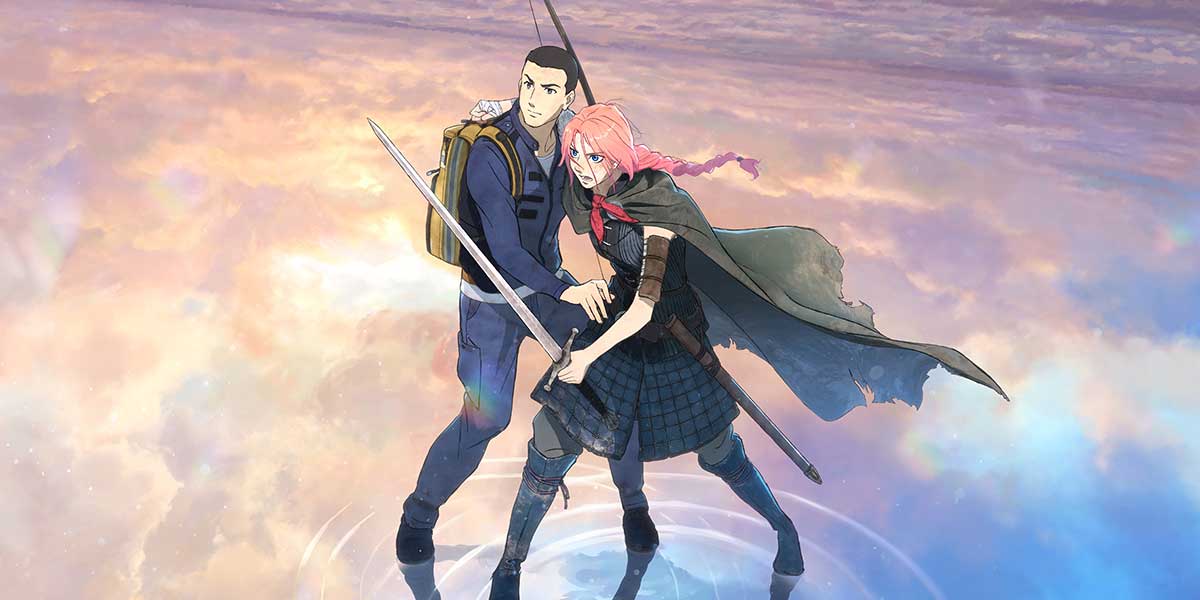
Among anime fans, Mamoru Hosoda has become one of the most beloved auteur directors. Unfortunately, his newest film Scarlet strives for greatness and depth, but ends up feeling convoluted, overly complicated, and ultimately empty. This is a disappointing release from the director who gave us the narrative swings of The Girl Who Leapt Through Time, the warm heart of Wolf Children, and the visual bombast of Belle.
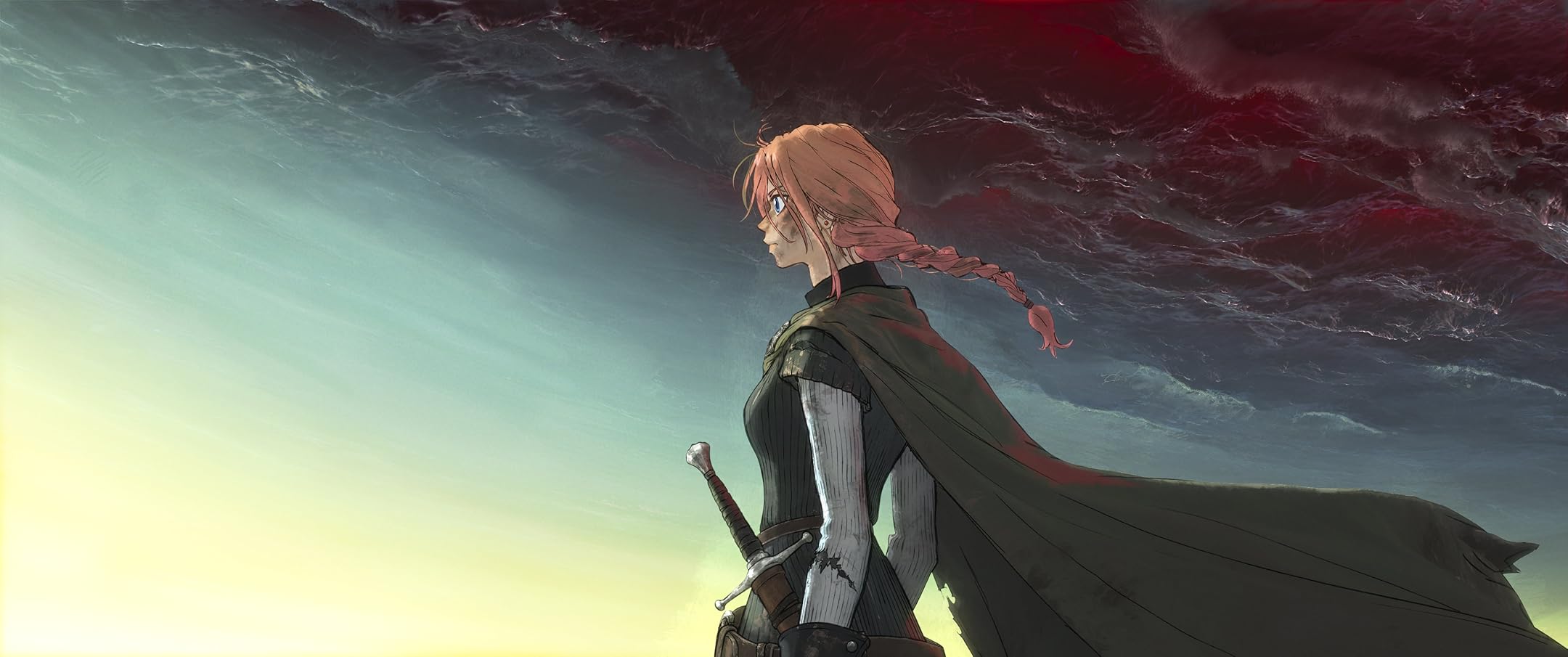
The film is loosely based on Hamlet, and the story is very familiar: Scarlet (Mana Ashida) is a young princess seeking revenge, after her father is murdered by her traitorous uncle Claudius (Kôji Yakusho). As Hosoda explained during a post-screening Q&A at the 2025 Toronto International Film Festival, “I wanted to think of revenge and the vicious cycle of revenge. Of course, when thinking of revenge, you can’t ignore Hamlet, one of the earliest tales of revenge, so I wanted to do a modern interpretation. This was the initial seed of this idea.”
However, Hosoda takes this seemingly straightforward story and vastly overcomplicates it: Scarlet is poisoned by her uncle and ends up in the “Otherlands”, a netherworld between time and space. Now, she must journey through the Otherlands to the top of the mountain where she can exact her revenge on her uncle and scale the staircase to Eternity. The story begins to feel convoluted, since the worldbuilding rules of the Otherlands are never clear.
Despite the complex mythology of the world, all of the characters are very thinly conceived and seem to have exactly one character trait—the uncle is traitorous, Scarlet is vengeful, the mystical ghost witch is mystical and ghostly. The only character with any dimension is Hijiri (Masaki Okada), a pacifist nurse from modern times who becomes Scarlet’s companion on her journey. Throughout the film, he acts as the antithesis to Scarlet’s vengeful, combative approach, insisting on a doctrine of non-violence and kindness. This is an interesting angle to the story, yet Hijiri’s character arc involves compromising his pacifism, which seemingly goes against the film’s larger message of longing for a world without war.
This example provides a glimpse into Scarlet’s thematic incoherence. The film reaches big, explicitly asking questions about what it means to be human, what it means to live or to die, what is love, and whether a world without violence is possible. Any one of these questions would be ambitious to tackle within a single film, yet Scarlet answers none of these questions sufficiently. By attempting to tackle all of them at once, Hosoda loses focus on the core of the story. A mid-film dance break about the meaning of romantic love also doesn’t appear to have much thematic connection to Scarlet’s quest for vengeance and journey of self-discovery, even if the song sounds catchy.
Scarlet’s thematic inconsistency further reflects in its uneven animation. The film uses a wide variety of animation styles: a simple, retro style for the scenes in Scarlet’s medieval world, 3D for scenes set in modern times, an incredibly photorealistic CGI jungle, and a blend of 3D and 2D anime for the majority of the Otherlands. Hosoda explained that this mashup of styles was intentional: “In film as a medium, and in animation especially, everything needs to be informed by and serve the story itself. Too often, we fall into the trap of thinking ‘it is anime, so everything is 2D or hand drawn’ or ‘it is Western, so it will all be 3D’. The story should define the character design and the look of the animation itself. I still don’t know if I have the answer, but, if you see the film and think that it matches the story and tone, we have found the balance between what the combination of 2D and 3D should look like.”
While this ambitious blend of styles may have been an intentional choice, that doesn’t make it aesthetically pleasing. The 3D stands out at times and the animation in the medieval world is incredibly retrograde and clunky, reminiscent of early computer-assisted anime in the early 2000s. There are scenes when the animation works well, usually during moments of visual splendor: a dragon emerging from the clouds, a volcanic eruption, lost souls dragging a body down to the underworld, a burst of light and color reminiscent of the stargate sequence from 2001: A Space Odyssey. The animation also excels during the action scenes: the character motion during fight scenes is very smooth and flows with a kinetic sense of energy. Unfortunately, the rest of Scarlet lacks this vitality and visual consistency.
Hosoda appears to have started out with lofty intentions, saying “the film for me was a thought-provoking exercise. You see that there is a lot of conflict in the world right now and it is impossible to not want to have revenge. In spite of that, I thought there must be a way to break the link of this vicious cycle, that chain reaction of revenge. The story is set 400 years ago, but we were trying to place that emotion in the modern context.” The ideas behind Scarlet’s story are worth admiring, but the uneven final product does not fulfill Hosoda’s goals.
• • •

Scarlet (Japanese: 果てしなきスカーレット)—Japan. Dialog in Japanese. Directed by Mamoru Hosoda. Running time 1 hour 51 min. First released September 4, 2025 at the Venice International Film Festival. Voices by Mana Ashida, Masaki Okada, Koji Yakusho.
This article is part of Cinema Escapist‘s dedicated coverage of the 2025 Toronto International Film Festival.