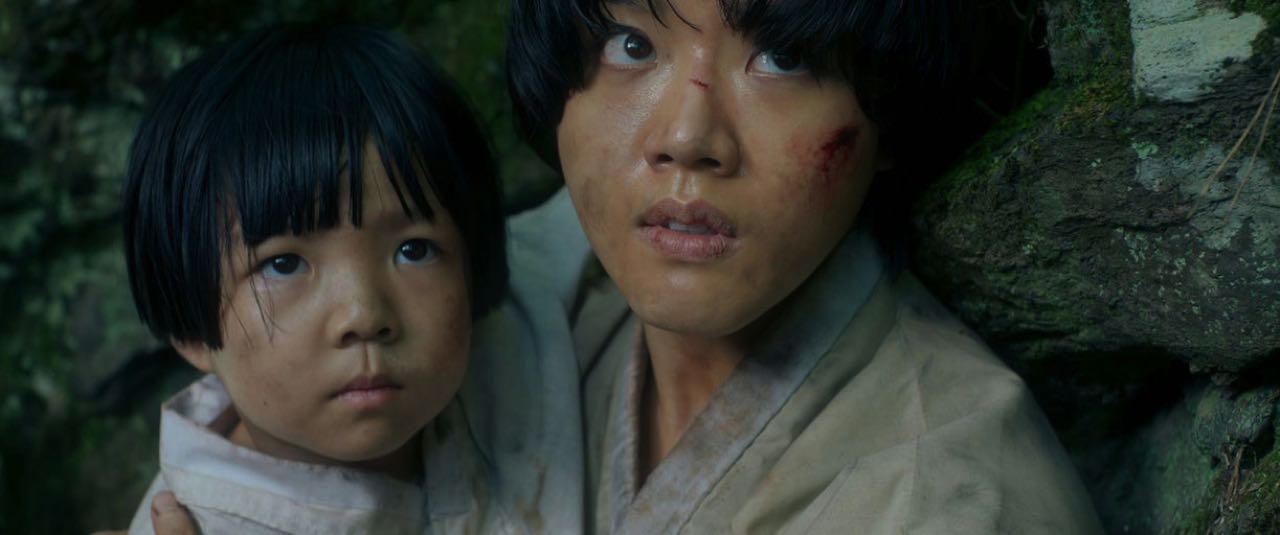
Jeju Island draws millions of visitors a year for its volcanic coastline and beautiful landscapes—but few know that the island has been the site of a long-suppressed massacre that occurred between April 1948 to May 1949. Director Ha Myung-mi’s Hallan pulls back the curtain on that tragic past, following a mother’s struggle to survive and protect her daughter.
Set on Jeju Island starting 1948, Hallan follows a 26-year-old haenyeo (traditional female diver) named Ajin, played by Kim Hyang-gi, as she leaves her six-year-old daughter Hae-saeng (Kim Min-chae) behind to search the mountains for her missing husband. When her village is burned down soon after, Ajin widens her search—which begins to feel increasingly desperate—to also include her daughter.
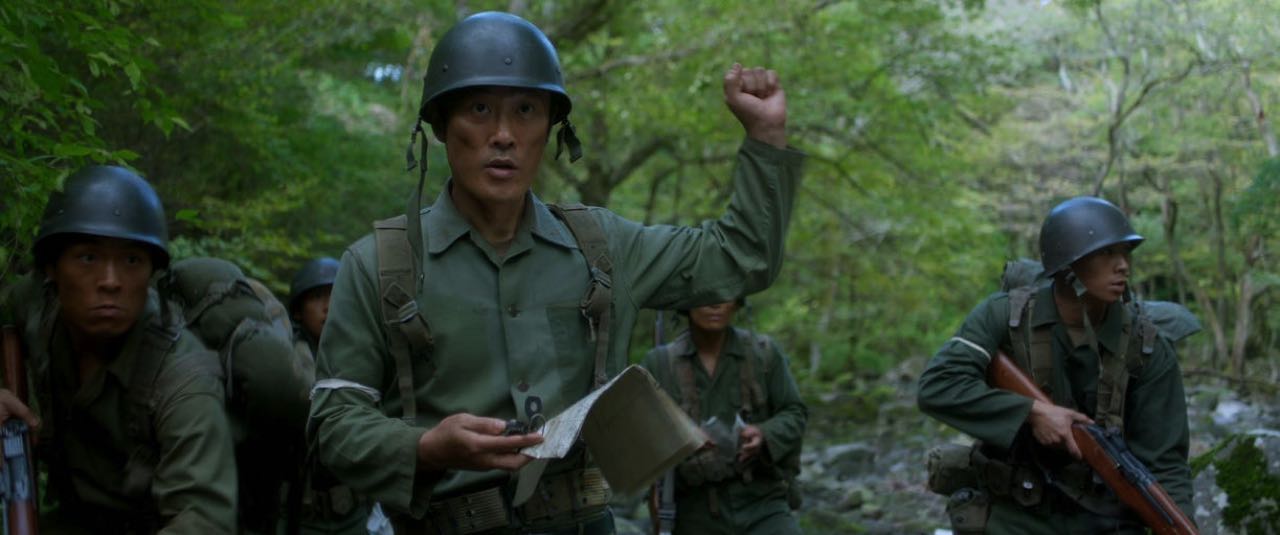
The tragedy underpinning the film is the Jeju 4.3 Uprising, which began as protests against the U.S. military-led South Korean administration and its plans to hold separate elections that residents feared would further divide the Korean peninsula at the 38th parallel. The government and right-wing paramilitary groups branded the uprising a communist revolt and answered with a brutal crackdown, burning villages and executing anyone suspected of harboring leftist sympathies. Around 30,000 civilians—roughtly 10% of the island’s population at the time—were massacred. These killings remained suppressed throughout South Korea’s military dictatorships all the way through the 1980s; even mentioning the uprising could lead to imprisonment.
Hallan arrives as the latest entry in a slow-building wave of art confronting that silence, following the 2012 film Jiseul and the 2024 documentary Until the Stones Speak. Author Han Kang’s 2024 Nobel Prize in Literature also helped push her novel We Do Not Part, which reflects on the legacy of the Jeju Uprising, to a much wider international audience. That momentum carried into this past March, when the novel’s English translation became the first Korean novel to win the U.S. National Book Critics Circle Award for fiction, and into official recognition the year before, when the “Revealing Truth: Jeju 4.3 Archives” were added to UNESCO’s Memory of the World Register in April 2025.
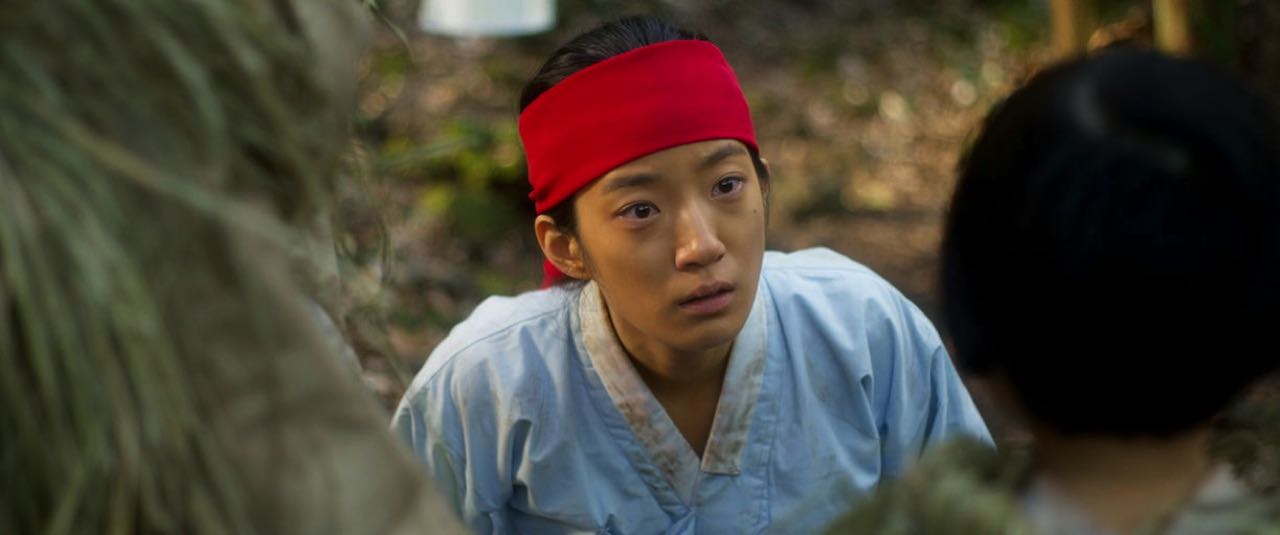
Stylistically, director Ha and cinematographer Eom Hye-jeong favor documentary-style static shots and flat colors to portray the tragedy as accurately as possible in Hallan. This observational approach feels raw, even primal, and grows more unsettling once the perspective shifts to Hae-saeng; seeing the violence through a child’s innocent gaze makes Ha’s direction all the more disconcerting. Ha isn’t interested in staging large battles or explaining political maneuvering — she instead leans into stripped-down, intimate sequences that make clear how tragedies can befall anyone once people in power decide they’re expendable. That humanism extends to how Ha treats each side of the conflict. She gives voice to villagers, rebels, and soldiers alike, and shows how the cycle of violence corrupts everyone it touches, from high-ranking officials down to rookie soldiers and fleeing islanders.
The performances in Hallan match that ambition. Kim Min-chae, playing Hae-saeng, commands the screen with a balance of naivete and steel remarkable for a child actor. Kim Hyang-gi is equally strong in her first role as a mother, a departure from the high-school roles that made her famous. To ground the film in place, Ha also worked with five dialect coaches to capture the slight variations in speech between Jeju’s different villages.
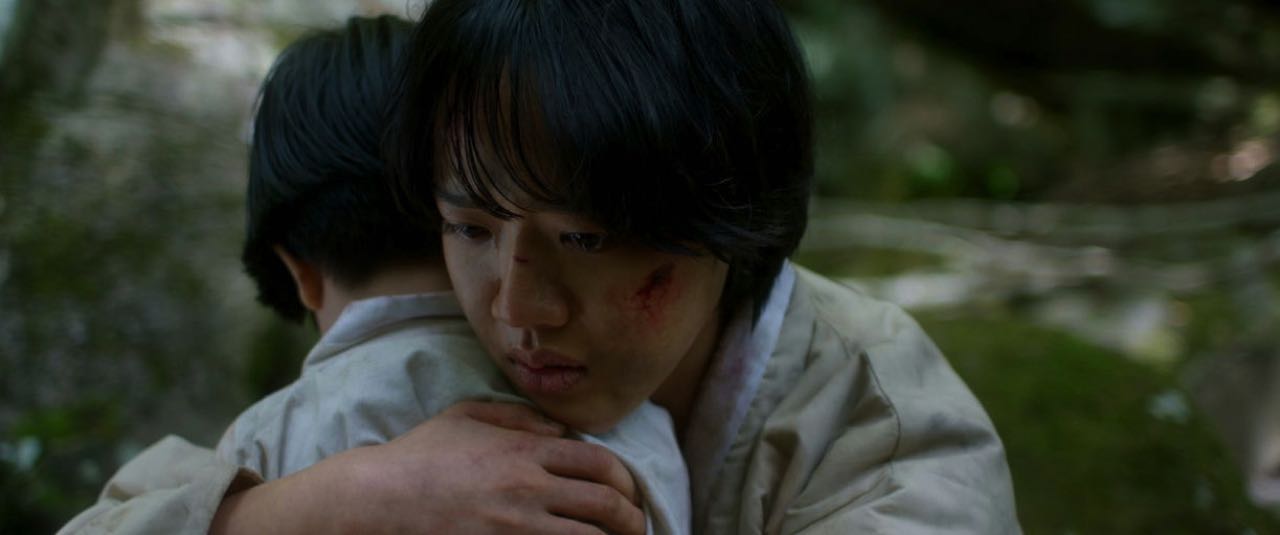
Despite those strengths, Hallan suffers from misplaced melodrama, with scenes that linger longer than necessary and are frequently oversold by a score that swells even when the moment doesn’t call for it. The bigger flaw is underdeveloped characters: outside of Ajin and Hae-saeng, figures like the village shaman remain background presences, and Ha never gives them the space to earn the audience’s empathy. Tighter editing and smoother scene transitions would have helped the film’s momentum throughout.
Hallan closes with a montage of gravestones and memorials, a simple but powerful call to remember the dead. That closing message lands clearly and leaves the film’s most affecting impression. Stylistically, Hallan shows plenty of promise, but doesn’t fully build momentum until those final shots arrive in the present day. Still, it leaves audiences with a much-needed call to honor those who lost their lives on Jeju.
Hallan (Korean: 한란)—South Korea. Dialog in Korean (traditional Jeju dialect). Directed by Ha Myeong-mi. Running time 1hr 59min. First released on November 26, 2025. Starring Kim Hyang-gi, Kim Min-chae, Seo Young-joo, Kang Chae-young, Kim Won-joon, Hwang Jung-nam, Kang Myeong-ju, Choi Seung-joon, Jang Jae-woong.
This article is part of Cinema Escapist’s dedicated coverage of the 2026 New York Asian Film Festival.