
The buzziest Chinese movie of 2026 earned over US$291 million on a US$2 million budget, cast a first-time actress in one of its lead roles, and unfolds almost entirely in Teochew—a dialect that most Chinese moviegoers need subtitles to understand. Now, Dear You, (给阿嬷的情书 in Chinese, which literally translates as “Love Letters for Grandma”) is gearing up for a North American theatrical run starting September 4, 2026.
When Dear You screened in Singapore, it attracted controversy for exemplifying China’s “united front” influence operations. Nevertheless, audiences in Singapore and neighboring Malaysia still packed theaters and made the movie a cultural phenomenon; Dear You penetrated public discourse so much that political parties in Malaysia’s southernmost Johor state even referenced it in appeals to ethnic Chinese voters.
Yet, it would be wrong to say Dear You represents a sea change in China’s soft power capabilities. The movie became popular in Southeast Asia because it was an effective melodrama, and thanks to a sizable Teochew diaspora hungry for content which appeals to their cultural heritage. However, Dear You’s cultural specificity and usage of a non-Mandarin dialect are still the exception rather than the norm for Chinese cinema, and the movie contains nationalistic undercurrents that may lessen its appeal among non-Chinese viewers. Thus, it is more appropriate to characterize Dear You as a creative fluke that operates within known limits of China’s influence apparatuses. While these apparatuses quickly and competently amplified Dear You to a primary target audience of ethnic Chinese, they did not assist the film’s production, and have no incentive to incubate more movies like it.
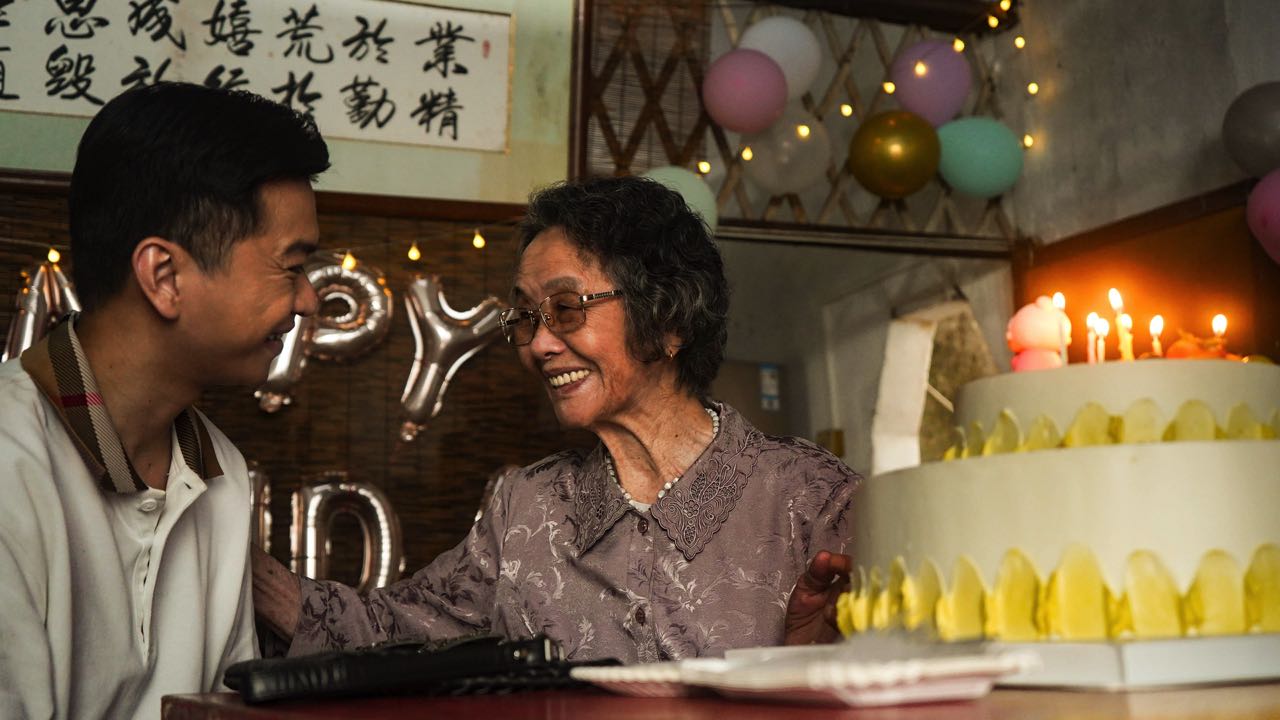
Before making Dear You, Director Lan Hongchun had already made two other Teochew dialect features which achieved nowhere near Dear You’s levels of popularity, and carved out a niche in exploring the culture and history of Guangdong province’s Chaoshan region, where the dialect comes from. Dear You opens in the modern day on a young man named Hiou-ui (Zheng Runqi) who lives in Shantou (the main city of Chaoshan) with his grandmother Iap Sogriu. Buried in debt, he seizes upon rumors that his grandfather Den Bhagseng (Wang Yantong)—who fled to Southeast Asia during the Chinese Civil War to avoid the KMT’s conscription efforts, but never returned—struck it rich in Thailand and left a chunk of wealth for him to inherit. Love letters that Bhagseng sent to Sogriu between the late 1940s and 1978 become the leads that Hiou-ui uses to kick off a search for Bhagseng’s purported fortune in Bangkok.
Instead of riches, Hiou-ui uncovers a woman named Zia Lamgi (Li Sitong, the first-time actress that Director Lan recruited after seeing her on Douyin) who, as it turns out, started ghostwriting Bhagseng’s letters to Sogriu starting from the year 1960. This twist sets off Dear You’s core narrative, which goes back in time to explore the life and hardships of Teochew Chinese migrants to Southeast Asia, using qiaopi (侨批) remittance letters as a decades-long bridge between Bhagseng and Sogriu.
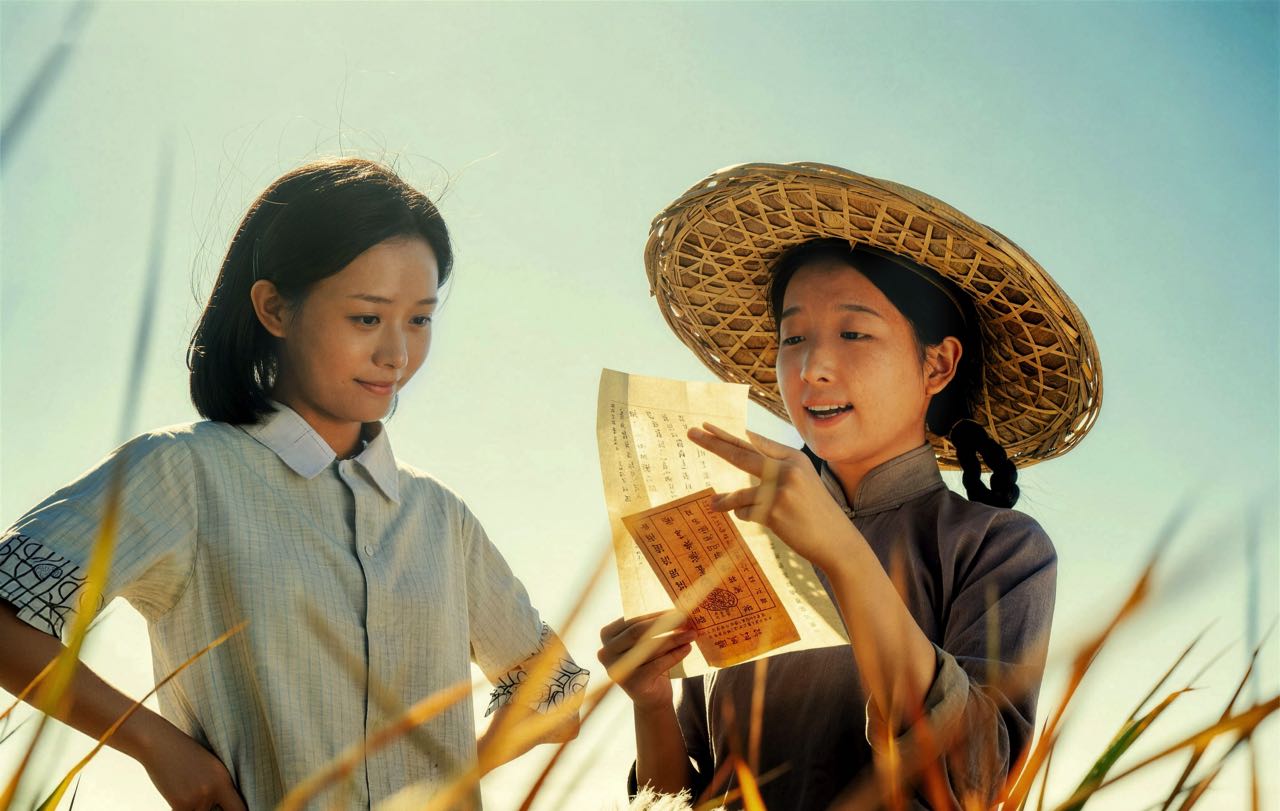
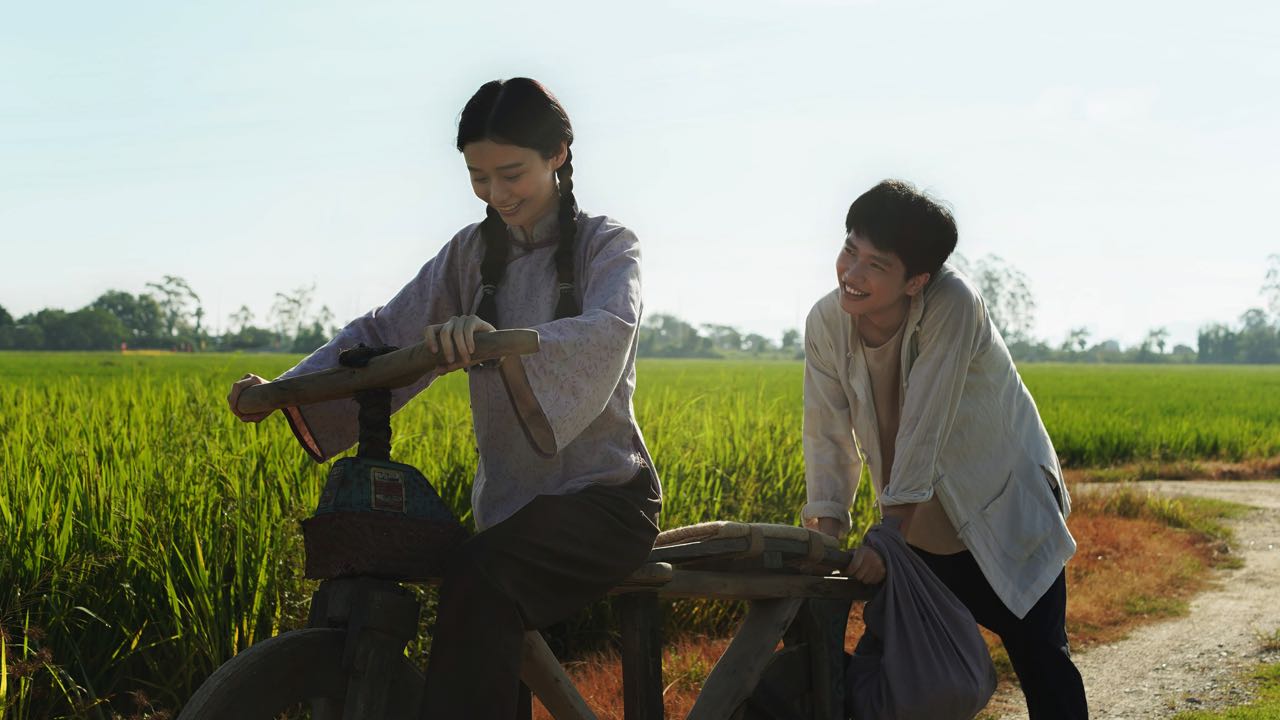
The triangular relationship between Bhagseng, Sogriu, and Lamgi becomes the emotional core of Dear You. Lan executes this with appropriate melodramatic flair, setting up each character in a way that makes the audience root for them. For example, he shows the young Bhagseng romancing Sogriu by handcrafting a bicycle from wood, and the two getting married out of love during an era when such relationships were less common. The various hardships that Bhagseng and Lamgi endure in Bangkok, as well as the longing Bhagseng and Sogriu feel for each other, keep wringing sympathy—and eventually tears—from the audience.
Admittedly, by the film’s end—especially with a particular character’s memory loss—these melodramatic choices can feel slightly overdone, in ways that echo popular Korean dramas. Yet, this choice to draw upon tried-and-true melodrama formulae probably benefits Dear You’s standing, at least amongst Asian audiences. In fact, the movie’s emotional tenor feels most comparable to 2024 Thai movie How To Make Millions Before Grandma Dies, which also centers on an intergenerational story of a Teochew Chinese family in Thailand. Director Lan was likely fully conscious of this connection, given he chose to cast Usha Seamkhum (who played the titular grandma in Millions) for a special role in Dear You.
Given How to Make Millions Before Grandma Dies’s immense success across China, Singapore, and Malaysia, it is not surprising that Dear You would also do well in those markets by following Millions’ path. Within Southeast Asia and Singapore specifically, the presence of a large Teochew diaspora (which make up around 20% of Singapore’s ethnic Chinese population) also connected perfectly with Dear You’s specific emphasis on the Teochew dialect and Chaoshan region, especially as a release valve against the Singaporean government’s long history of disfavoring non-Mandarin dialects.
However, most countries in the world do not have a sizable Teochew diaspora, and Dear You makes a litany of narrative choices that may limit its appeal outside of ethnic Chinese. The film’s melodrama leans heavily on mechanisms that reinforce Chinese identity at the expense of others. Despite mostly occurring in Thailand, Dear You only shows Thais as nameless villains, for instance corrupt police officers who try to shut down an underground Chinese-language school that Bhagseng and Lamgi’s circle of Teochew immigrants run in Bangkok. Thailand’s small Indian community also makes a surprising appearance, in the form of thugs who commit arson against the Chinese.
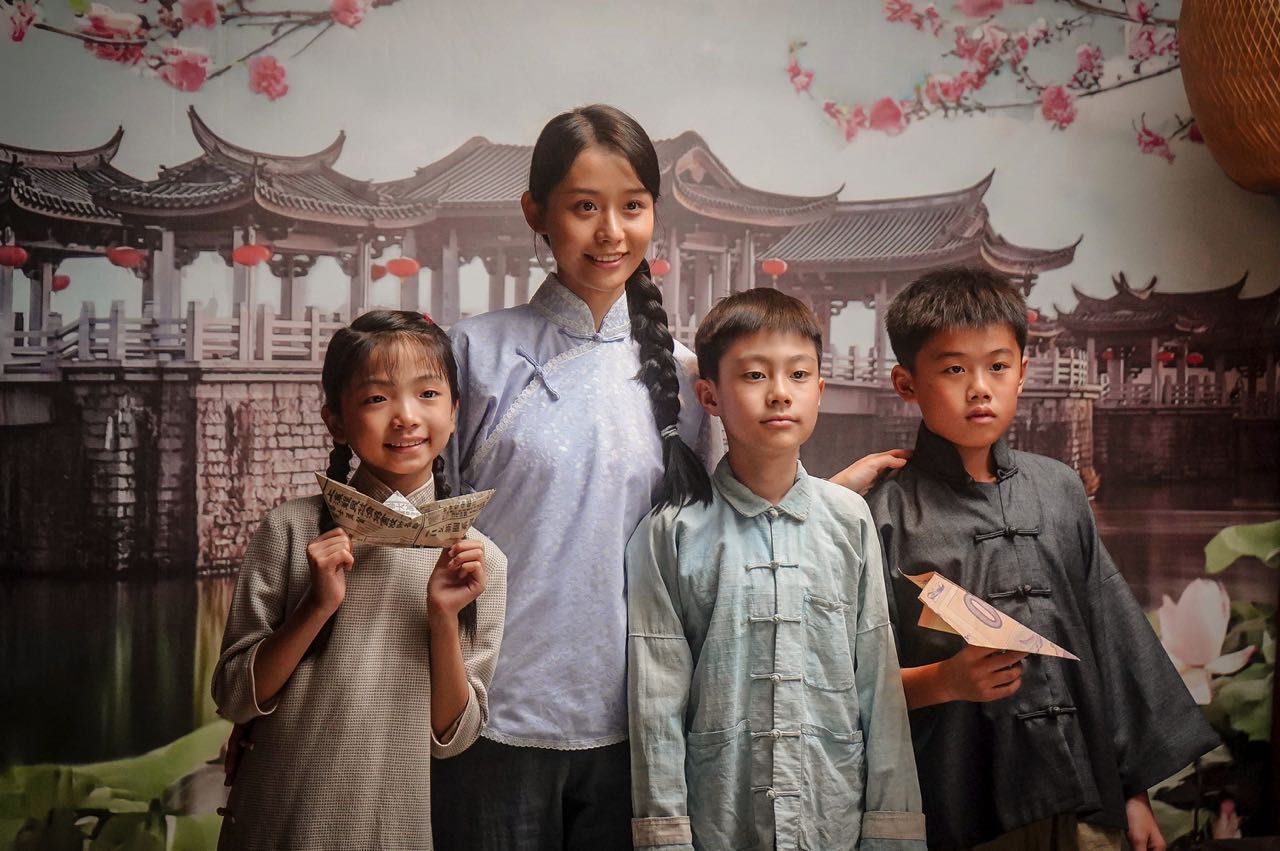
On top of that, the film makes direct appeals to ethnonationalist sentiments. In one scene, an elderly woman passionately declares how a mixed-race girl must learn the Chinese language properly so that she can retain a sufficient connection to her motherland. Industriousness, filial obligation, and the value of motherhood are also themes that Dear You emphasizes—enough for officials from China’s film regulator to praise the movie’s alignment with broader “core socialist values”.
Furthermore, those familiar with Chinese history will notice certain conspicuous absences from the film’s plot. Despite spanning the period of 1945-1978, Dear You’s letter-writing plotline completely ignores the Great Leap Forward (1958-1962) and Cultural Revolution (1966-1976). The movie explicitly introduces Sogriu as the daughter of a wealthy landowner, but she and her family suffer zero consequences from that association.
At least one Chinese commentator with the username “DX” on Douban (China’s equivalent to Letterboxd or IMDb) also took note of Dear You’s mismatches with historical records, citing how Party apparatuses during the Cultural Revolution sometimes designated those with relatives overseas as “reactionaries”, and even pushed people to cut contact with overseas relatives entirely. While more nationalistic Chinese netizens have challenged this interpretation of history, it is difficult to dispute the fact that Dear You simply does not show anything related to these tumultuous events of modern Chinese history.

Unsurprisingly, when Dear You screened in Southeast Asia, controversy erupted over whether the movie was “propaganda”. The biggest trigger of this controversy was an article from columnist Sim Tze Wei in Singapore’s Chinese-language Lianhe Zaobao. Titled “Is ‘Dear You’ China’s perfect propaganda film?”, it argued that Dear You is a “highly successful piece of United Front work” targeted at “the global Chinese diaspora, in particular the ethnic Chinese in Southeast Asia”. The article caused enough buzz for China’s state-affiliated Global Times to issue a thinly veiled rebuttal, kicking off even more controversy that ensnared Global Times editor Hu Xijin, and leadership from Lianhe Zaobao’s holding company.
Indeed, Dear You represents an excellent case study of the nuanced nature of China’s United Front operations, and how they piggyback on existing popular media. Director Lan himself has thanked China’s Central United Front Work Department for assisting the film’s publicity efforts, for instance in a video captured at the government-sponsored 2026 China International Civilization Conference. A July 2026 investigation from OSINT Team similarly noted that, while China’s United Front apparatuses did not directly fund the movie or co-opt Director Lan during production, they did swoop in to “adopt” Dear You after it started gaining traction.
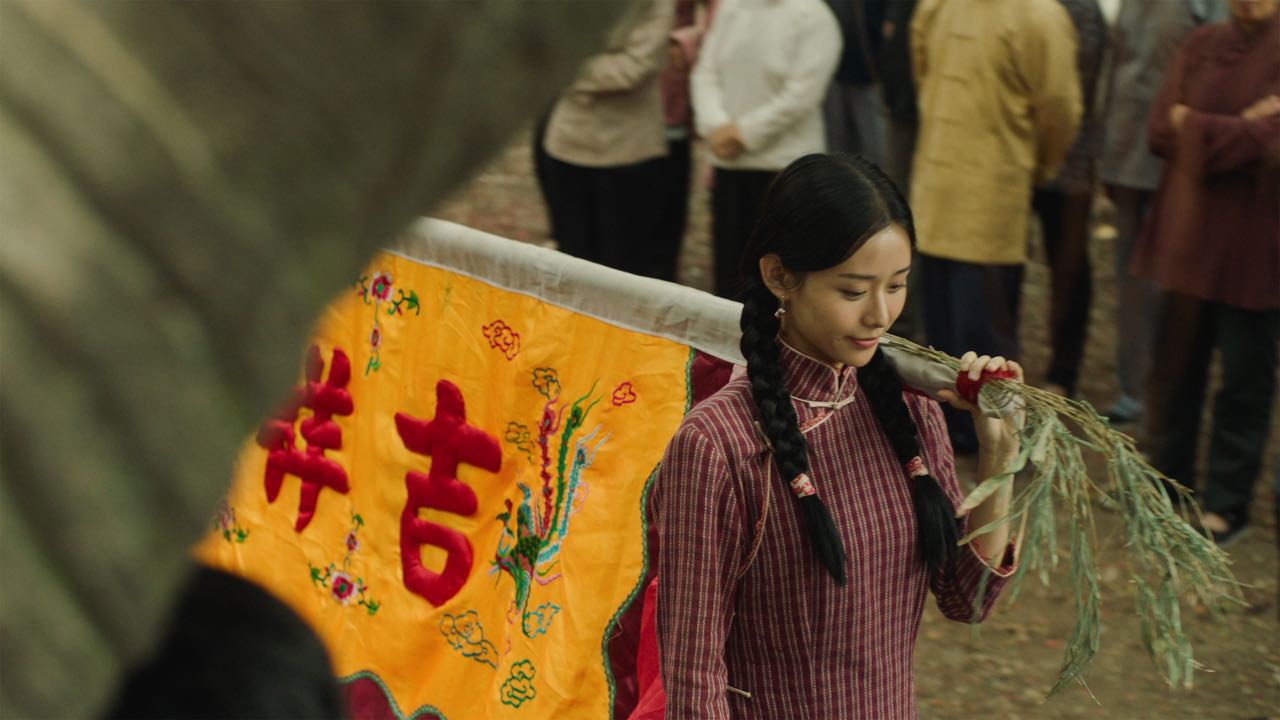
Still, the fact that ethnic Chinese Singaporeans and Chinese Malaysians continued flocking to see Dear You despite all the controversy does not signal some turning point in China’s United Front efforts, or broader soft power ambitions. Whether manifested through United Front apparatuses or not, any state’s cultural diplomacy efforts can only amplify their existing “soft power resources”. Dear You was simply an appealing melodrama which catered very well to certain market segments—namely, ethnic Chinese with some appreciation of the movie’s socio-historical context. If the movie wasn’t good to start with, then no amount of state-driven amplification could help it win audiences’ hearts.
However, Dear You’s nationalistic undertones and Teochew specificity also reinforce how China’s “soft power resources”—at least in the domain of cinema—have not broadened their appeal beyond ethnic Chinese. There is little evidence that non-Chinese ethnicities in Singapore and Malaysia caught onto Dear You’s fever, and non-Chinese reviewers have given more measured assessments of the movie. In other words, China’s ability to reliably make “good” movies, particularly those with broad appeal, has not inherently changed.
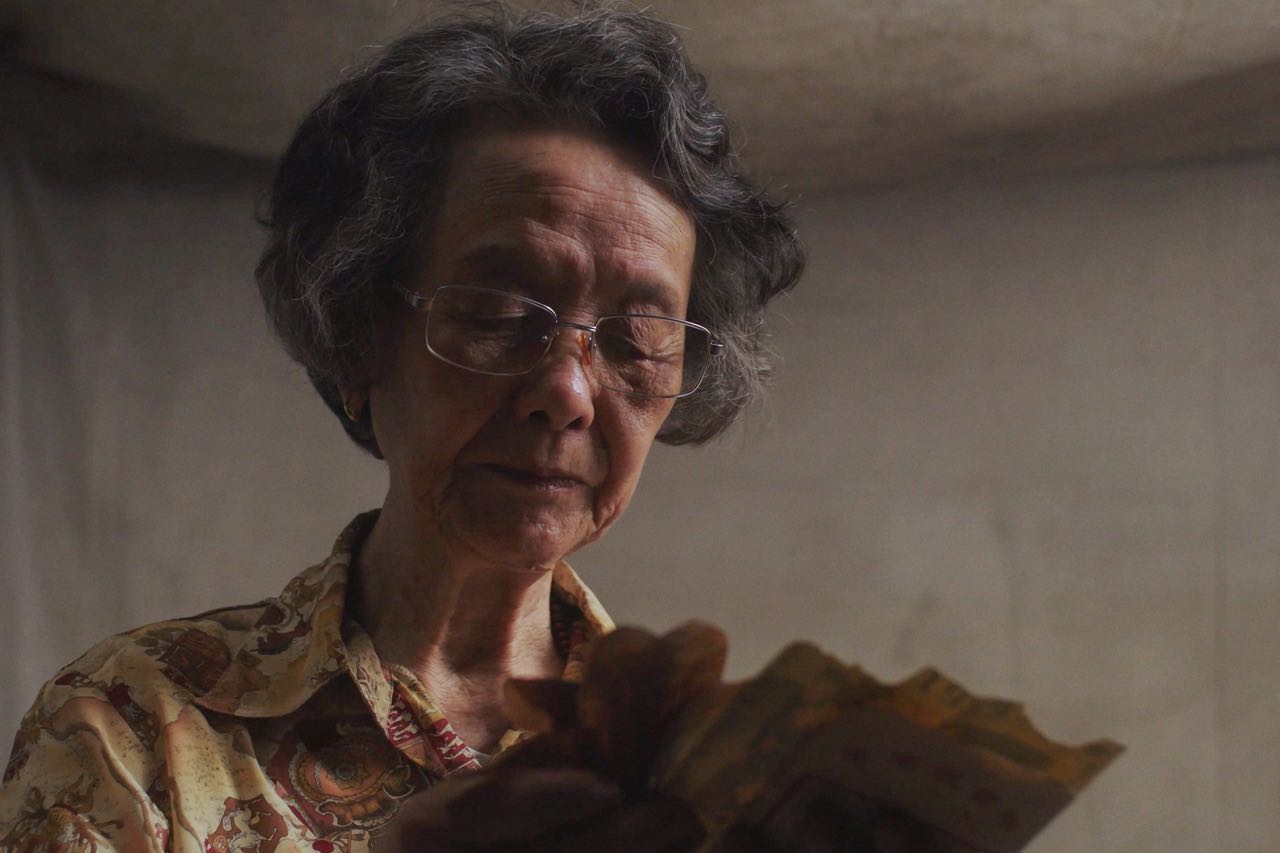
This demonstrates continuity with other popular movies that China’s cultural diplomacy and United Front apparatuses have “adopted”, for example 2025’s Ne Zha 2. While Ne Zha 2 became 2025’s highest grossing movie worldwide (thanks to the size of China’s domestic market) and popped up in screenings sponsored by China’s foreign ministry (similar to Dear You), it only made 3% of its revenue outside of China. Chinese diaspora may have eagerly filled theaters to watch Ne Zha 2, but an A24-released English dub of the movie bombed at the US box office—with critics arguing that the movie’s artistic choices did not translate well to non-Chinese audiences. Even with sold out theaters in Singapore, it would not be surprising if Dear You repeats similar proportions. Around 2% of the movie’s earnings (US$6 million out of US$291 million) as of July 28, 2026 were from outside of China; Dear You’s US release would need to have astronomical popularity to boost that percentage beyond low single digits. This is not necessarily a fatal flaw even from a political perspective though. Overseas Chinese have generally been the primary target of China’s United Front and overseas influence efforts, and Dear You simply reinforces this practice.
There is also no sign that China’s authorities want to seize upon Dear You’s success to encourage more non-Mandarin dialect filmmaking, even if it could build bridges with overseas Chinese communities. . Official sources that praise Dear You acknowledge the film’s usage of Teochew, and even cite local government programs that helped shape its cultural specificity—but never encourage the production of more dialect movies. This is not surprising given decades of Chinese government policy promoting Standard Mandarin, and recent efforts to continue strengthening the status of Standard Mandarin above other dialects. Of the top 50 grossing Chinese movies of all time, Dear You is the only one not in Standard Mandarin, and will likely remain so for the foreseeable future.
With Dear You’s impending US release, and speculation from some commentators that the film might become China’s nominee for the 2027 Best International Feature Oscar, it may be tempting to see the movie as a triumph of Chinese soft power or, more nefariously, a shadowy United Front conspiracy from the beginning. Sure, China’s governmental organs have amplified the movie. But Dear You’s success is more of a market-driven fluke. Its subject matter and artistic choices—which it executes competently—appealed to China’s vast film market, as well as niche overseas audiences that conveniently aligned with existing targets of United Front campaigns. Making a Chinese equivalent to Parasite, however, likely requires a globally appealing phenomenon that exceeds both Dear You’s scope and Beijing’s comfort zone for cinematic productions.
• • •

Dear You (Chinese: 给阿嬷的情书) — China. Dialog in Teochew Chinese. Directed by Lan Hongchun. Running time 1hr 58min. First released April 30, 2026. Starring Li Sitong, Wang Yantong, Wu Shaoqing, Zheng Runqi, Wang Xiaohui, Usha Seamkhum.
Dear You will have a North American theatrical release starting September 4, 2026 thanks to Well Go USA.