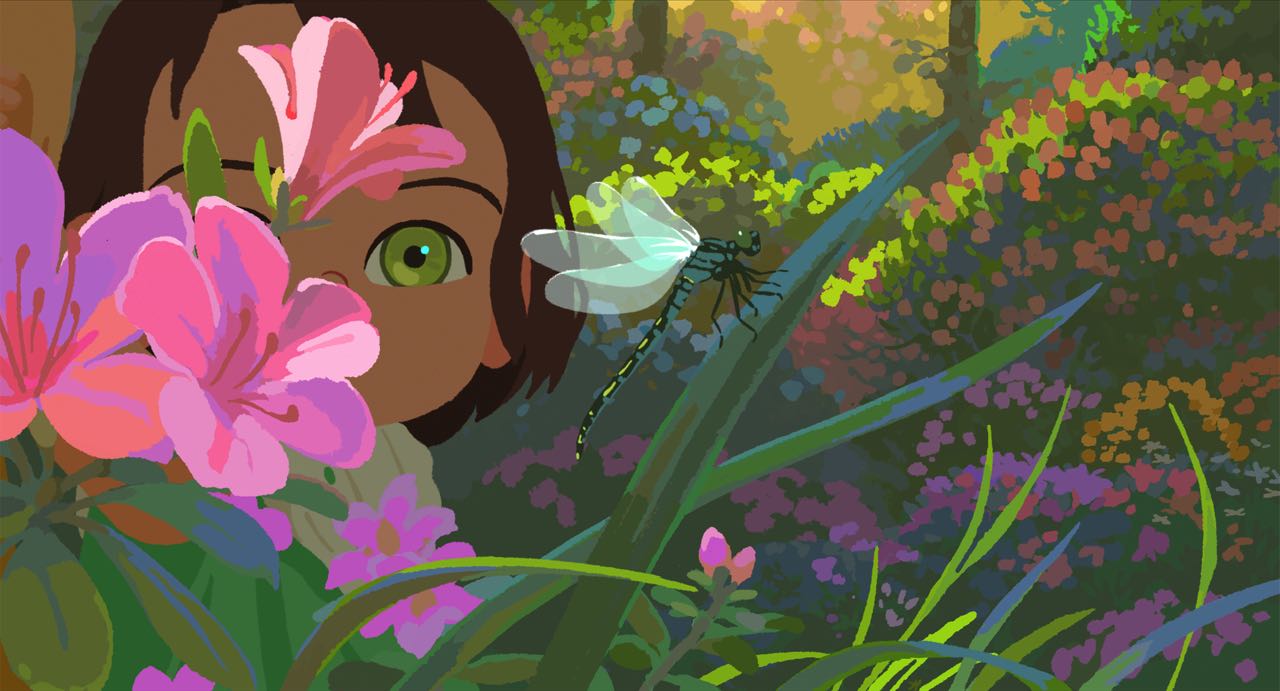
Undoubtedly one of the most beautifully animated movies of the year, Little Amélie or the Character of Rain is a strong feature film debut from directors and screenwriters Mäilys Vallade and Liane-Cho Han. Adapted from Amélie Nothomb’s bestselling autobiographical novel The Character of Rain, the film chronicles a formative year in the life of a young Belgian girl growing up in Japan, delicately weaving together themes of memory and cultural identity.
Perhaps self-consciously recalling the beloved French cult film of a similar namesake, this film views the world with a similar sense of magic. Seen through the eyes of our two-year old protagonist, the world is bursting with life, color, and emotion. The film’s visual tone forgoes hard outlines, opting instead for soft, pastel colors and flowing shapes. The palette, dominated by gentle pinks, blues, and creams, mirrors the emotional state of our young protagonist: tender, curious, occasionally melancholic, emotions and sensations blurring together as the exterior reflects Amélie’s internal world.

Vallade and Han’s influences are worn proudly, particularly the nods to Japanese animators like Isao Takahata and Hayao Miyazaki. Fans of Studio Ghibli may notice similarities in both setting and theme to films like My Neighbor Totoro and Only Yesterday, both films about young girls growing up in rural Japan and recognizing the profundity in little moments. Parallels can also be drawn from this film to Takahata’s The Tale of Princess Kaguya, in how the outer world reflects the protagonist’s inner emotions, and the Miyazaki influence is seen in both the tender (flowers blowing through the wind) and the ugly (giant carp heads slovenly gobbling up food pellets). The impressionistic visual style also owes a debt to French animator Rémi Chayé, whose layout work on this film lends it a spatial elegance and painterly quality.
Little Amélie belongs to a long tradition of non-Japanese filmmakers making movies set in Japan. However, rather than embodying the exoticizing perspective of an outsider, Little Amélie focuses on those messy places where cultural identities meet, blur, and intersect. Amélie’s experience is not one of alienation, but of immersion—her Belgian heritage and Japanese surroundings coexisting in a way that feels authentic and deeply personal.
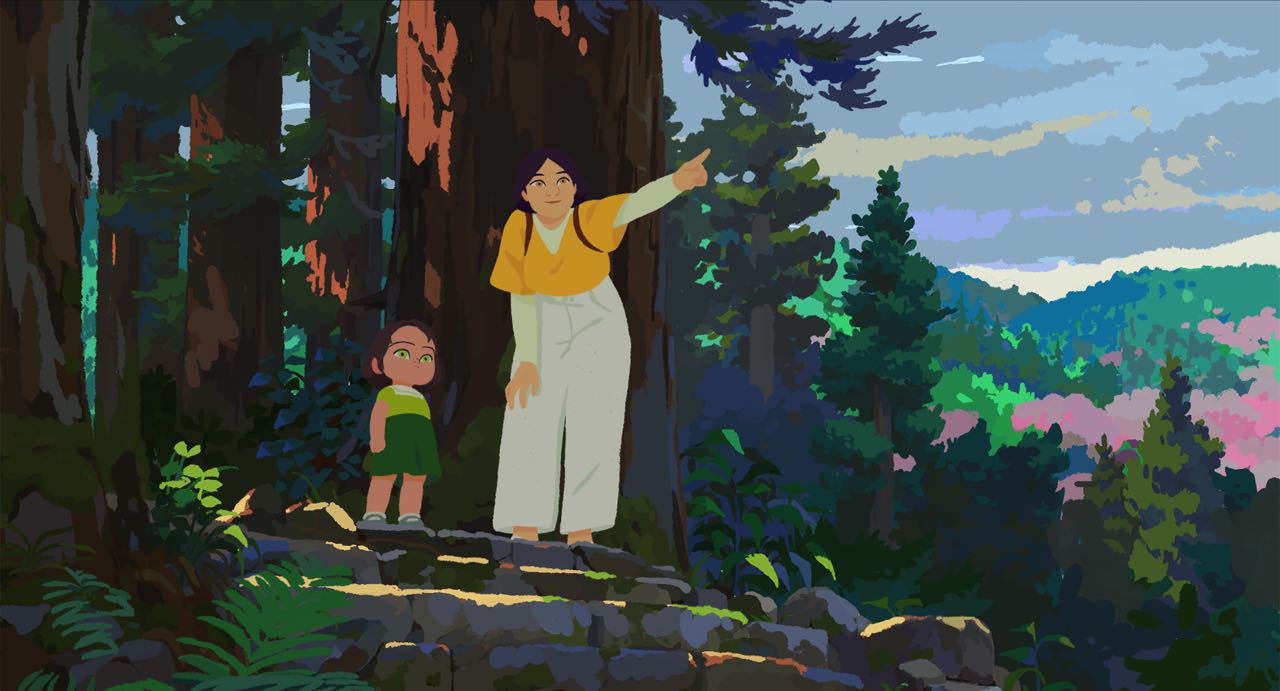
One of the film’s most poignant sequences involves the remembrance of war through cooking—a moment that encapsulates the film’s ability to convey complex ideas through intimate, seemingly normal acts. Here, the preparation of food becomes a vessel for memory and grief. In Amélie’s vividly imaginative world, cooking can be war, her brother can be a carp, and a vacuum cleaner can be a god.
Amélie’s world is full of divinity. In fact, she describes herself as a god for the majority of the story. This metaphysical angle, rooted in Japanese cultural beliefs about children under the age of seven being closer to gods than to humans, may be befuddling for viewers unfamiliar with these cultural concepts. However, for those who have spent time with young children—or who simply remember their own early years—this will resonate deeply.
In sum, Little Amélie or the Character of Rain is one of the most beautifully animated films of 2025. It is comforting and emotional, artfully crafted, and full of life and imagination. Vallade and Han have created a work that invites us to see the world through the eyes of a child.
• • •
Little Amélie or the Character of Rain (French: Amélie et la Métaphysique des tubes)— France. Dialog in French. Directed by Maïlys Vallade, Liane-Cho Han. Running time 1hr 18 min. First released May 20, 2025 (Cannes). Voices by Loïse Charpentier, Yumi Fujimori, Victoria Grobois.
This article is part of Cinema Escapist‘s dedicated coverage of the 2025 Toronto International Film Festival.