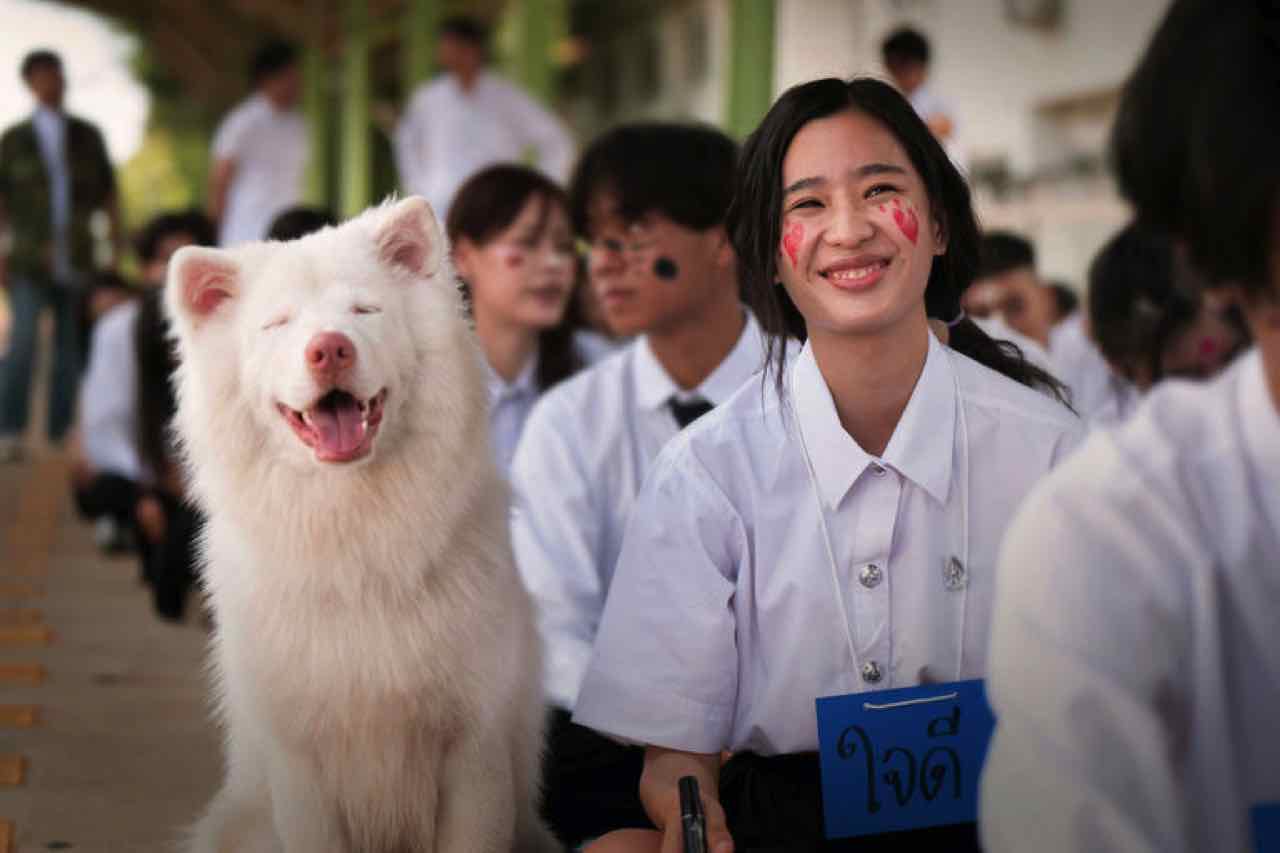
Gohan is the latest film from GDH 559, the studio behind recent Thai hits such as How To Make Million Before Grandma Dies. This time, the studio takes on the life of a dog named Gohan.
Originally a stray, with a distinctive white coat and pink nose, Gohan is picked up by Hiro, a Japanese automobile engineer living in Chonburi, and given his name because of his white color. Hiro is on the verge of being forced to retire by his company. He must choose to either accept retirement and return home to his family in Japan, or try something else entirely. Taking care of Gohan gives Hiro new meaning in life, and compels him to rethink what paths he has in life.
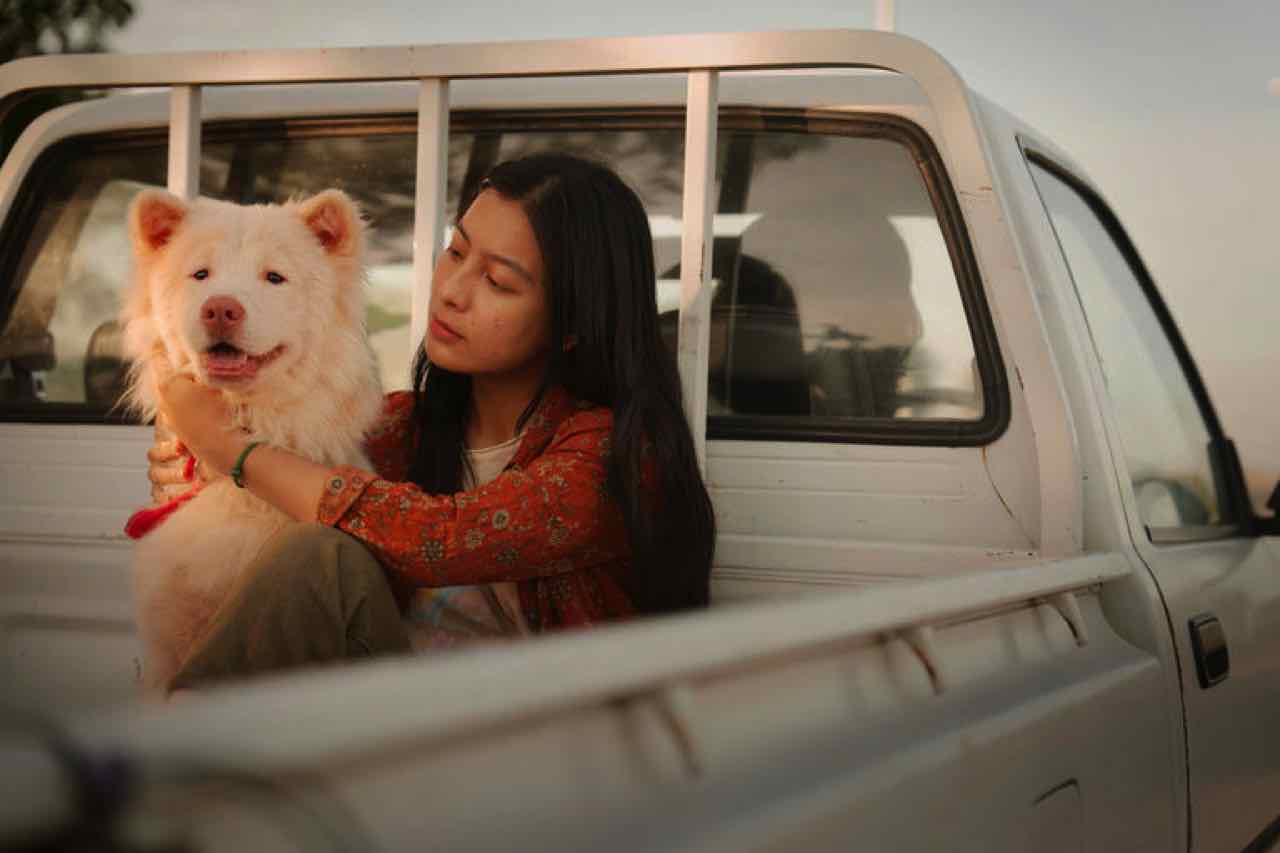
Fast forward a few years, and Gohan is again a stray, following Hiro’s tragic death from COVID-19. Gohan is taken in by a dog shelter run by the unscrupulous Goong, who uses Gohan’s tragic story to attract donations but neglects and even kills the dogs at his shelter. The person who takes care of Gohan during this time is Namcha, an undocumented migrant worker from Myanmar, who eventually runs away with Gohan.
By the story’s conclusion, Gohan is now living outside of the Hua Takhe Railway Station, having returned to the streets. College students at the nearby King Mongkut’s Institute of Technology Ladkrabang take care of Gohan until he gets hit by a car. Nearing the end of his life, Gohan is then taken in by Pelé and Jaidee–a couple who seem to be on the verge of permanently breaking off their relationship.

If anything, Gohan is a melodrama, one highly reliant on the charm of its leading canine actors as they depict Gohan through his three stages of his life. Though Gohan is adorable enough, not all of the three segments are equally compelling— each segment has a a different director, which leads to sudden shifts in production style.
The first segment when Gohan’s owner is Hiro, is probably the most levelheaded This part of the story manages to equally balance humor and the life issues faced by Hiro attendant with aging. When Gohan is cared for by Namcha, and then later by Pelé and Jaidee, the story descends to the level of melodrama. Especially in its second segment with Namcha, the movie makes confusing forays into magical realism, and, at times, depict Gohan as having human-like intelligence.
Gohan does well enough as a tearjerker, if a melodramatic one. Strong production values and capable acting hold it together as a narrative. While the movie might suffice as children’s fare, it is far from a great work, probably due to its issues with internal consistency, and reliance on tugging at the audience’s heartstrings.
• • •

Gohan (Thai: โกฮัง..หัวใจโกโฮม) — Thailand. Dialog in Thai, Japanese, and Burmese. Directed by Chayanop Boonprakob, Nattawut “Baz” Poonpiriya, Atta Hemwadee. Running time 2hr 21min. First released April 2, 2026. Starring Jinjett Wattanasin, Tontawan Tantivejakul, Kitachima Yasushi, Poe Mamhe Thar, Chartchai Chinsri, Nopphand Boonyai.
This article is part of Cinema Escapist’s dedicated coverage of the 2026 New York Asian Film Festival. Gohan screens July 21 at SVA Theatre with a Q&A featuring directors Chayanop Boonprakob and Baz Poonpiriya, and again July 22 at the Elinor Bunin Munroe Film Center’s Howard Gilman Theater.
This article is also published in No Man Is An Island, an online publication focused on the connections between everyday life and politics. No Man Is An Island is brought to you by the team behind New Bloom Magazine.