
Much Anglophone reportage about Myanmar since its military junta overthrew a nominally democratic government in 2021 has focused on fighting between rebel groups and the junta’s troops. Up until the March 2025 Myanmar Earthquake and diplomatic intervention from China, rebel groups had enjoyed a degree of positive momentum, though the junta remains solidly entrenched in urban centers like Myanmar’s economic capital Yangon. Yet, in Yangon and other cities, another related struggle has been boiling over: the plight of garment factory workers fighting for fair wages and working conditions.
It’s amidst this backdrop that The Maw Naing’s film MA – Cry of Silence provides a subtle yet powerful portrait of one woman’s personal struggles. The movie centers on an 18 year-old woman named Mi Thet, who finds work at a Yangon garment factory to support her family in the countryside, where the civil war has made everyday existence precarious. Yet, as Mi Thet shuffles between the dark enclosures of a worker’s hostel and the oppressive fluorescence of the factory floor, stability and hope remain scarce. The factory has not paid Mi Thet and other workers in two months, and Mi Thet’s colleague Nyein Nyein is trying to organize a strike in response.
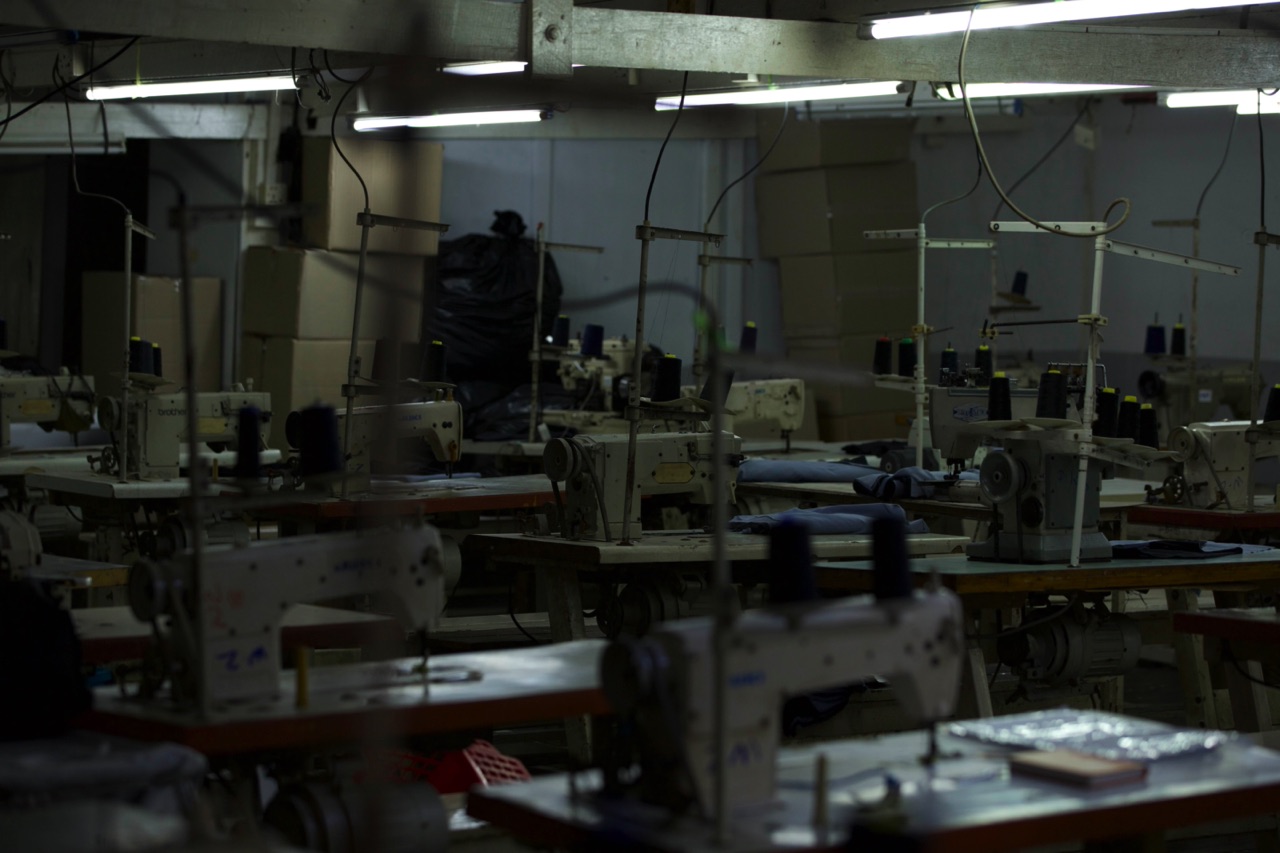
MA – Cry of Silence performs superbly at creating an atmosphere of oppression whilst staying true to the realities of garment worker tribulations in post-coup Myanmar. The film also excels at—without ever becoming preachy—situating its narrative within the context of not just Myanmar’s long-thwarted struggles for freedom, but also the global nature of labor exploitation.
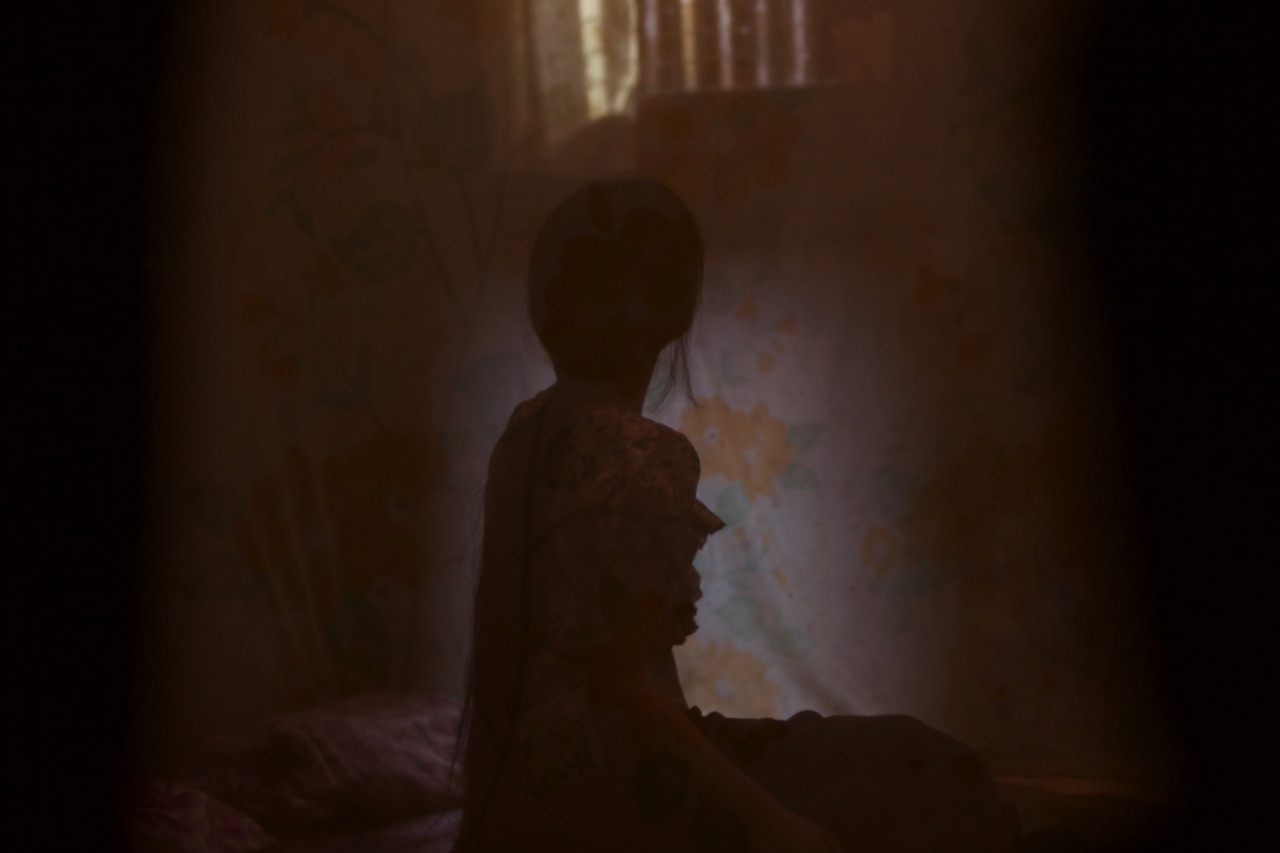
Almost all of the film takes place within the confines of either Mi Thet’s worker’s dormitory, or the factory; it is as if she and her colleagues are not allowed to exist elsewhere. Cinematography and mise-en-scene accentuate the suffocating nature of these settings. We only ever see the dormitory at night, with any light stifled by the coffin-like embrace of dank wooden walls. The only light in the movie is artificial and fickle, with most of it emanating from the factory’s blackout-prone fluorescent lamps. Access to such lights is conditional; a faceless foreman paces about the factory floor with a metal ruler, doling out arbitrary thwacks of discipline that interrupt the otherwise deafening clatter of sewing machines. In certain moments the camera cuts between the faces of workers and close-ups of sewing machine parts, as if inviting comparison between different cogs in the same mechanical system.
It is a system—one of global capital and local labor—that feels, and is, all too authentic. Since the 2021 coup, labor conditions in Myanmar have significantly deteriorated. Conflict and trade disruptions have caused hyperinflation in the Myanmar kyat, decimating the value of workers’ stagnant wages. The military regime has also cracked down heavily upon organized labor, which had become a rallying point for pro-democracy protests in the coup’s immediate aftermath. Yet, Myanmar’s garment factory workers—who are mostly young and female just like in MA – Cry of Silence—have continued to strike, with one recent successful action against a Taiwanese-owned Adidas shoe factory just a few weeks before this article’s publication.
However, as MA – Cry of Silence explores in certain pivotal segments, the colluding forces of state power and global capital win out more often than not. Mi Thet and her colleagues hope to appeal to their factory’s Chinese owner for fair payment, an endeavor rooted in assumptions of good faith that crumble in the face of geo-economic realities.
Indeed, MA – Cry of Silence offers repeated but never heavy-handed reminders that state violence and labor exploitation work hand-in-hand. The film intersperses both handheld videos of contemporary anti-junta protests and archival footage from Myanmar’s 1988 Uprising at key moments. The character of Ko Tun, a physically scarred survivor of the 1988 Uprising who resides as a shriveled shadow of his former self in Mi Thet’s hostel, offers another reminder of the traumatic political legacies that afflict Myanmar to this day.
What is most impressive about MA – Cry of Silence is that, despite its obviously political subject matter, director The Maw Naing shot the film on location in Myanmar during 2022, after the coup. Apparently, he and Korean producer Oh Young-jeong had to convince the junta that they were shooting a “harmless romantic melodrama”, and sent footage out of the country in diplomatic pouches; some of the film’s crew members were later killed or disappeared by the junta as well for involvement in pro-democracy activities. It is a “making of” journey that rather befits MA – Cry of Silence’s subject matter, and appropriately reflects the muted determination and courage of the film’s protagonists, as well as the millions of everyday Burmese they represent.
• • •

MA – Cry of Silence (Burmese: မ)—Burma/South Korea. Dialog in Burmese. Directed by The Maw Naing. First released October 4, 2024 at the Busan International Film Festival. Running time 1hr 14min. Starring Su Lay, Kyawt Kay Khiang, Ko Nanda, Nwe Nwe Soe.
This article is part of Cinema Escapist‘s dedicated coverage of the 2025 New York Asian Film Festival.