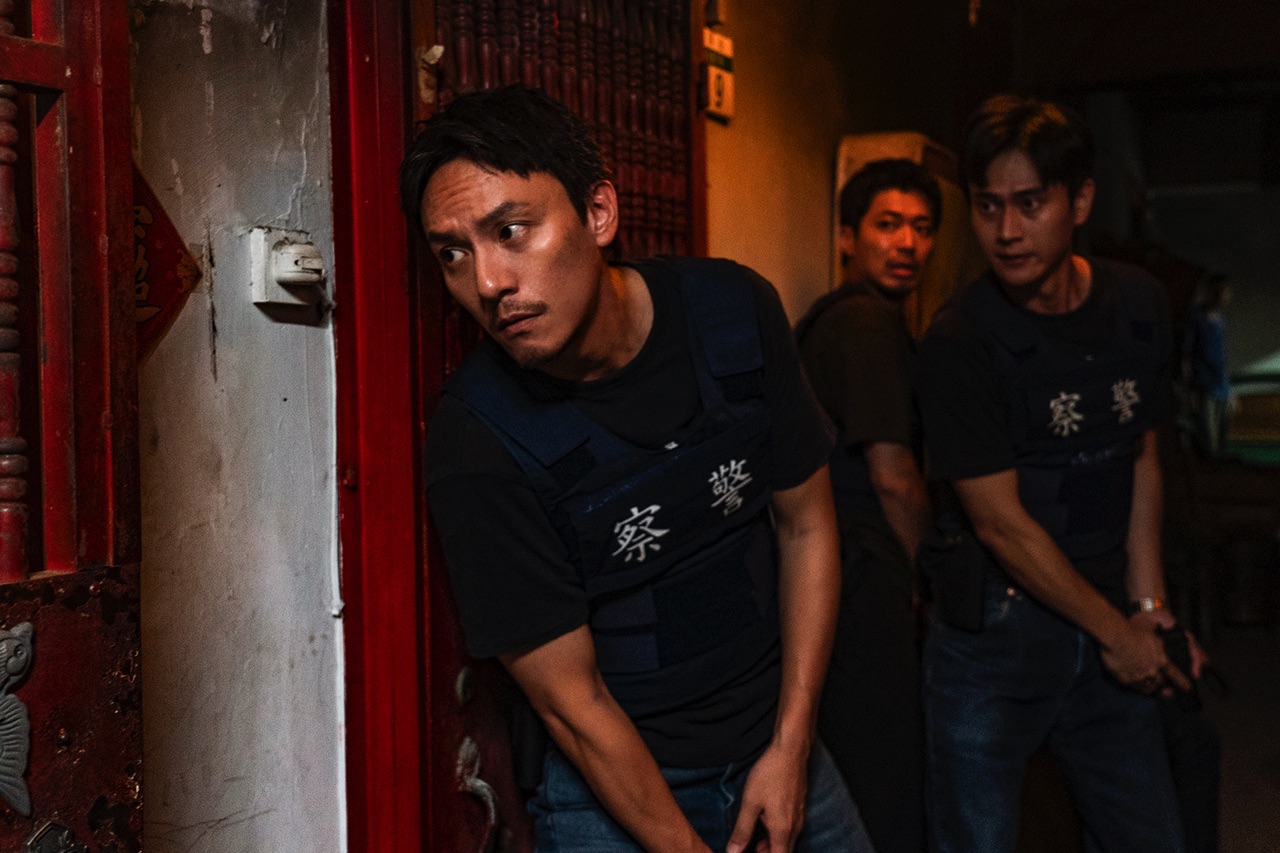
Chung Mong-hung’s latest film The Embers proves a major stumble for a director who has otherwise distinguished himself in past years with movies that offer social commentary. Set in the year 2006, The Embers follows a detective named Chang Cheng-tze. While investigating a stabbing that took place in a crowded market during broad daylight, Chang finds that the case has roots in Taiwan’s authoritarian White Terror period. Specifically, the case seems to have connections with the disappearance of an elderly man named Hsu Shi-jie, who the movie quickly reveals has been kidnapped by a food entrepreneur named Mo Tzu-fan—who seeks revenge for his father, a victim of the White Terror.
The Embers, then, can be criticized on several levels. For one, as Taiwanese film critics and commentators have generally highlighted, the film frames White Terror victims and their families as morally equivalent to White Terror perpetrators, twisting those victims’ search for truth into a desire for violent revenge. Likewise, The Embers adopts a tone that quite clearly sides with individuals who carried out acts of torture and murder during the authoritarian period. This is especially apparent in the movie’s denouement, which largely suggests that such acts were necessary during turbulent times.
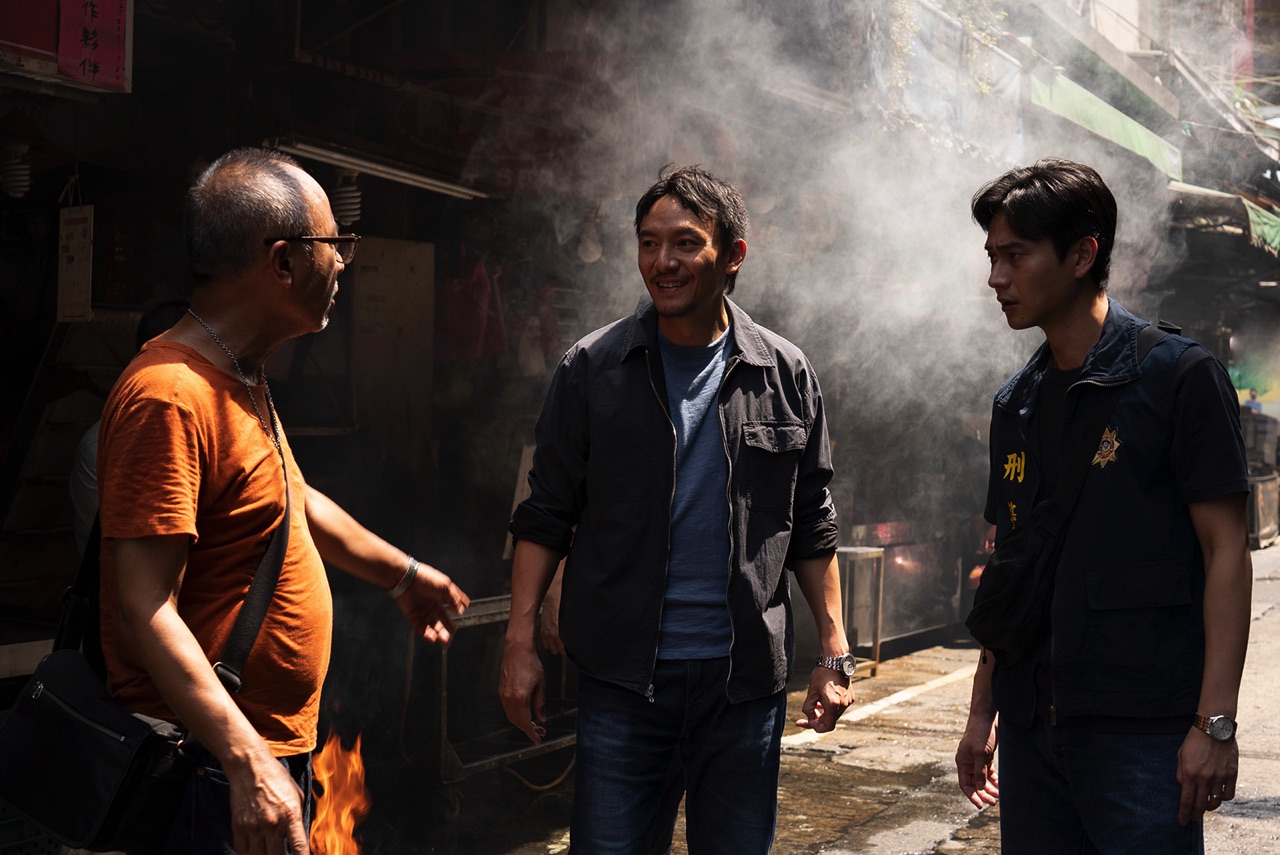
Even so, Chung likely did not wish to take a specific political stance with The Embers. Rather, it may simply be that he did not think very much about Taiwan’s authoritarian past, and hoped to draw on it as material for a crime procedural. Yet, this failure to engage with history leads him to rather repugnant moral conclusions, ones that affect victims and descendants who are still alive today.
Indeed, in recent Taiwanese movies, one increasingly observes the White Terror used as a source of curiously depoliticized and aestheticized representations of the past,, as in the Detention franchise. However, it is very rare to see a movie that sides with the victimizers, rather than the victims, of this period.
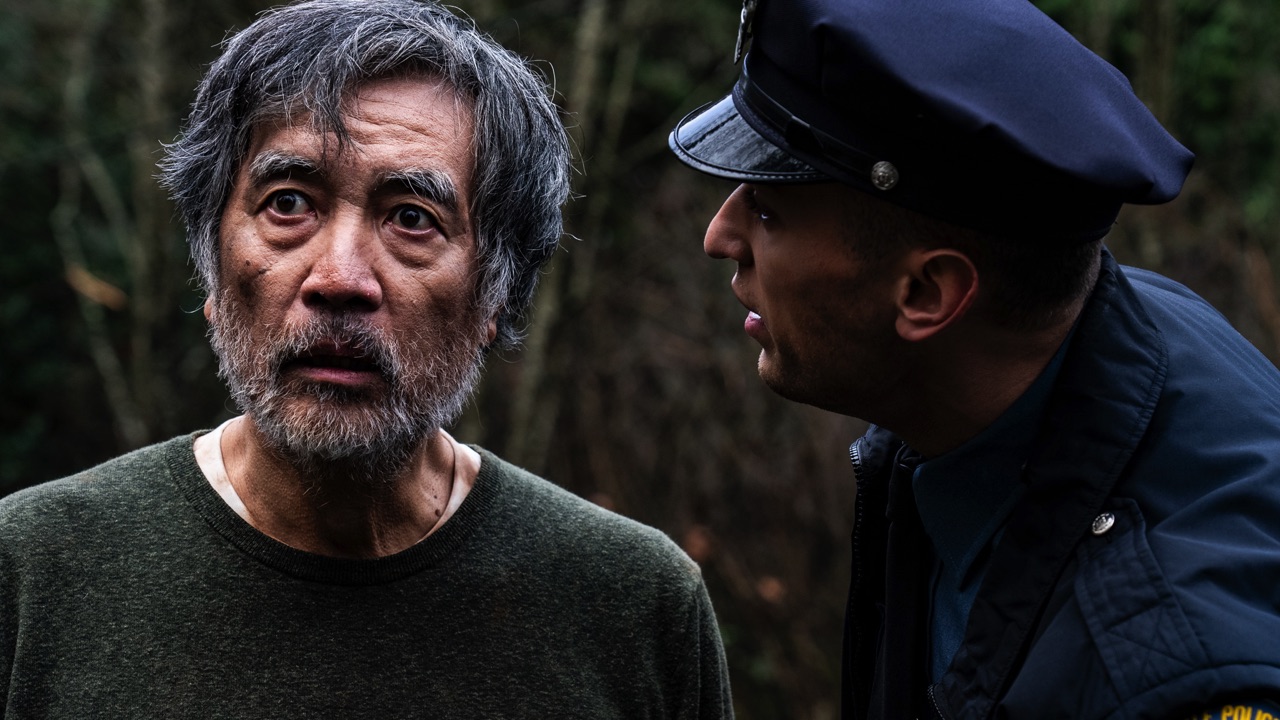
Beyond its problematic political stance, The Embers is also just not a very engaging movie. Namely, the film suffers from an overly long runtime, convoluted plot, and a cast that is so large that characters become hard to distinguish from each other. By the film’s end, viewers will find it difficult to track either character motivations or the many different plot threads.
For example, while Chang Cheng does his best playing Chang Cheng-tze, his character has few distinguishing characteristics or visible motivations besides being a workaholic cop with a Hongkonger mother. Though Chang later befriends Hsu’s daughter as a potential love interest, the two have little chemistry. Liu Kuan-ting’s performance as Chang’s rash subordinate Tsai Hsiao also lacks chemistry with Chang, and Mo Tzu-yi’s turn as villain Mo Tzu-fan is mostly one-note. Reportedly, actors were not allowed to improvise in any way on The Embers, and had to completely adhere to the script. This resulted in what other critics have described as a robotic “NPC-like” delivery, adding to a mechanical, wooden plot that is largely driven–rather literally–by Chang driving around and talking to different individuals.
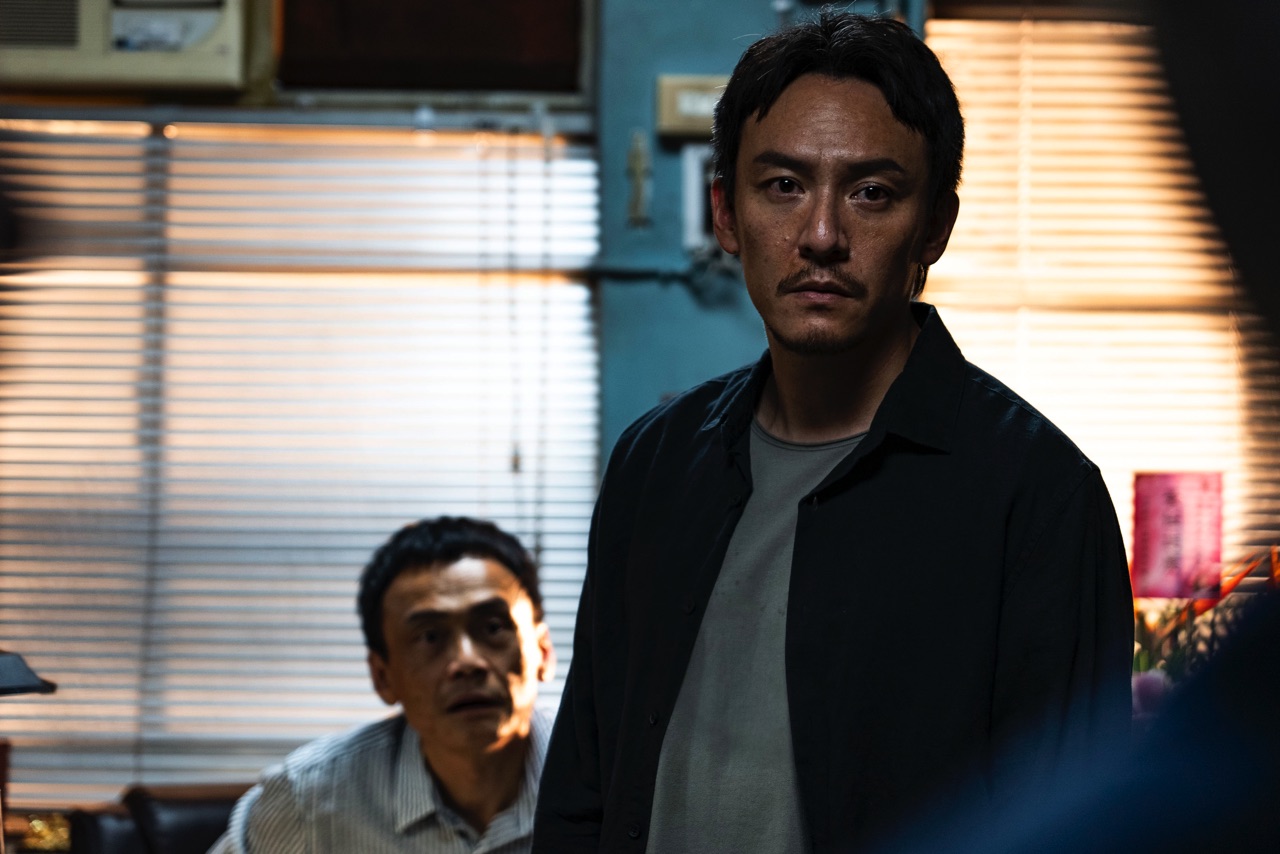
Overall, The Embers would likely be a better movie if Chung Mong-hong reduced the size of its cast and simplified its murder mystery elements, allowing it to focus on the plot threads of a few key characters. While Chung has gained much international attention in recent years because of A Sun, The Embers reveals the fatal flaw in many of his films–they are more often than not melodramas, whose plots are often advanced by endless successions of improbable coincidences. Though not the most unbearable watch for those with two and a half hours to kill, The Embers is far from compelling.
• • •

The Embers (Chinese: 餘燼)—Taiwan. Dialog in Mandarin Chinese. Directed by Chung Mong-hong. First released November 15, 2024. Running time 2hr 42min. Starring Chang Chen, Mo Tzu-yi, Chin Shih-Chieh, Chen Yi-wen, Hsu Wei-ning.
This article is part of Cinema Escapist’s dedicated coverage of the 2025 New York Asian Film Festival.
This article is also published in No Man Is An Island, an online publication focused on the connections between everyday life and politics. No Man Is An Island is brought to you by the team behind New Bloom Magazine.