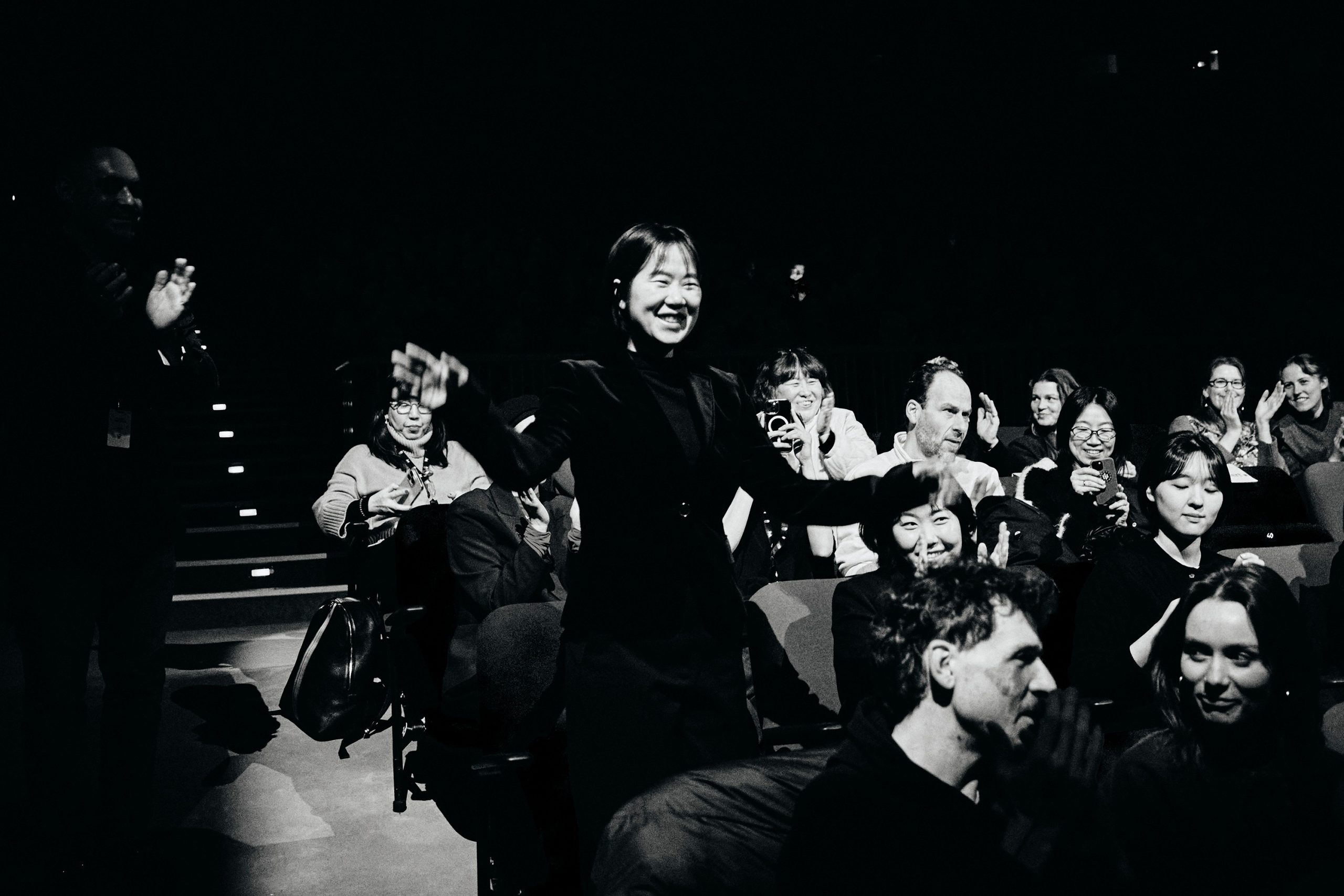
Director Yoo Jae-in has always been interested in honing her craft. She first worked as an artist in Seoul after graduating from the Department of Printmaking at Hongik University. Then she began making films through workshops at Mediact and Chungmuro Media Centre. The result is a series of short films, including Ghwa The Last Name (2023), which won the Best Short Film award at the Blue Dragon Film Awards. It was only a matter of time until she tried her hand at a feature film. To prepare, she joined the feature film production research program at the Korean Academy of Film Arts, where her debut film, En Route To, served as her graduation project.
The coming-of-age seriocomedy follows high schoolers Kyung-sun (Lee Ji-won) and Yoon-ji (Sim Su-bin), who couldn’t be more different: Yoon-ji is introverted, while Kyung-sun is sociable and a rebel, with a side hustle selling vapes. When Yoon-ji discovers she is pregnant by her teacher, she and Kyung-sun form an unlikely bond, navigating the use of dubious abortion pills and confronting their uncertain futures.
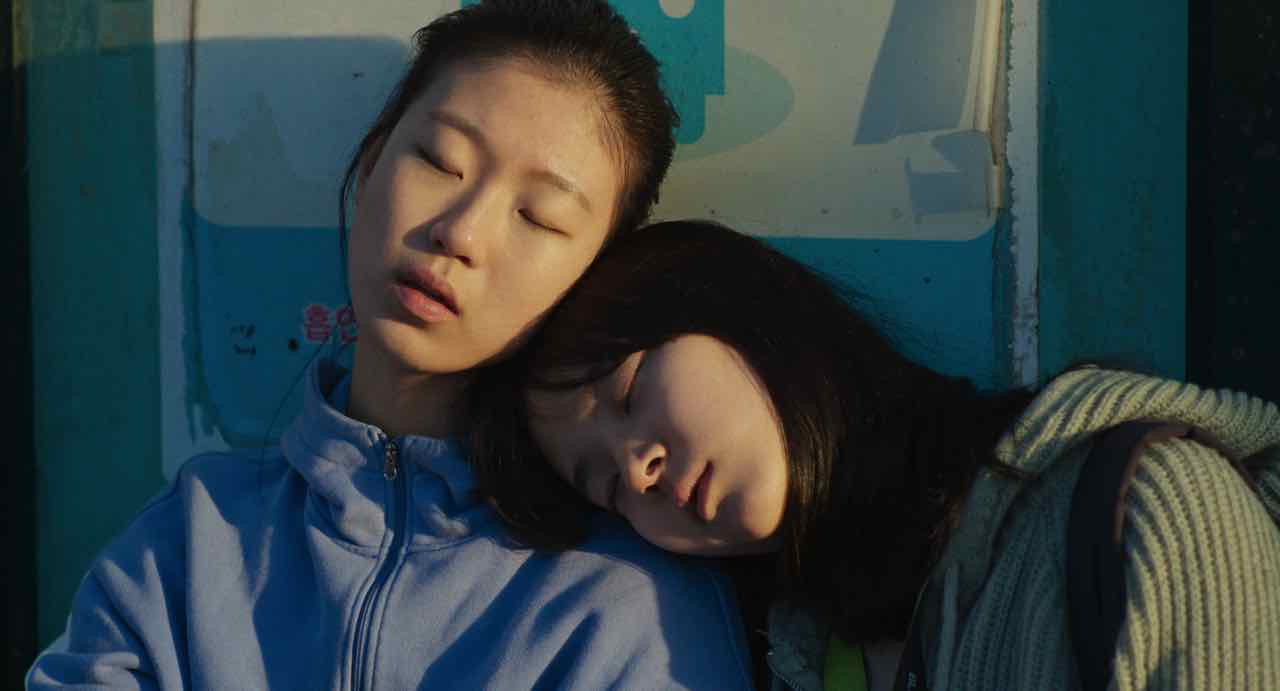
The strength of En Route To lies in the authentic bond between these two characters. Yoo avoids judgment, allowing their growth to remain authentically messy. The film transcends typical coming-of-age tropes, offering a poignant look at the systemic challenges facing young South Korean women.
Despite the 2021 legalization of abortion in South Korea, minors still face significant barriers, including mandatory parental consent and limited systemic access. Although teenage pregnancy rates remain low, those affected encounter deep social stigma and isolation. Yoo uses this backdrop to emphasize how community and support networks are vital for those navigating such difficult choices.
Yoo, acting as both writer and director, maintains impressive control over the film’s pacing and narrative. She effectively balances somber themes of infidelity and abandonment with slapstick humor that underscores the protagonists’ youth. The resulting film is polished and confident, choosing to focus on intimacy rather than bleakness.
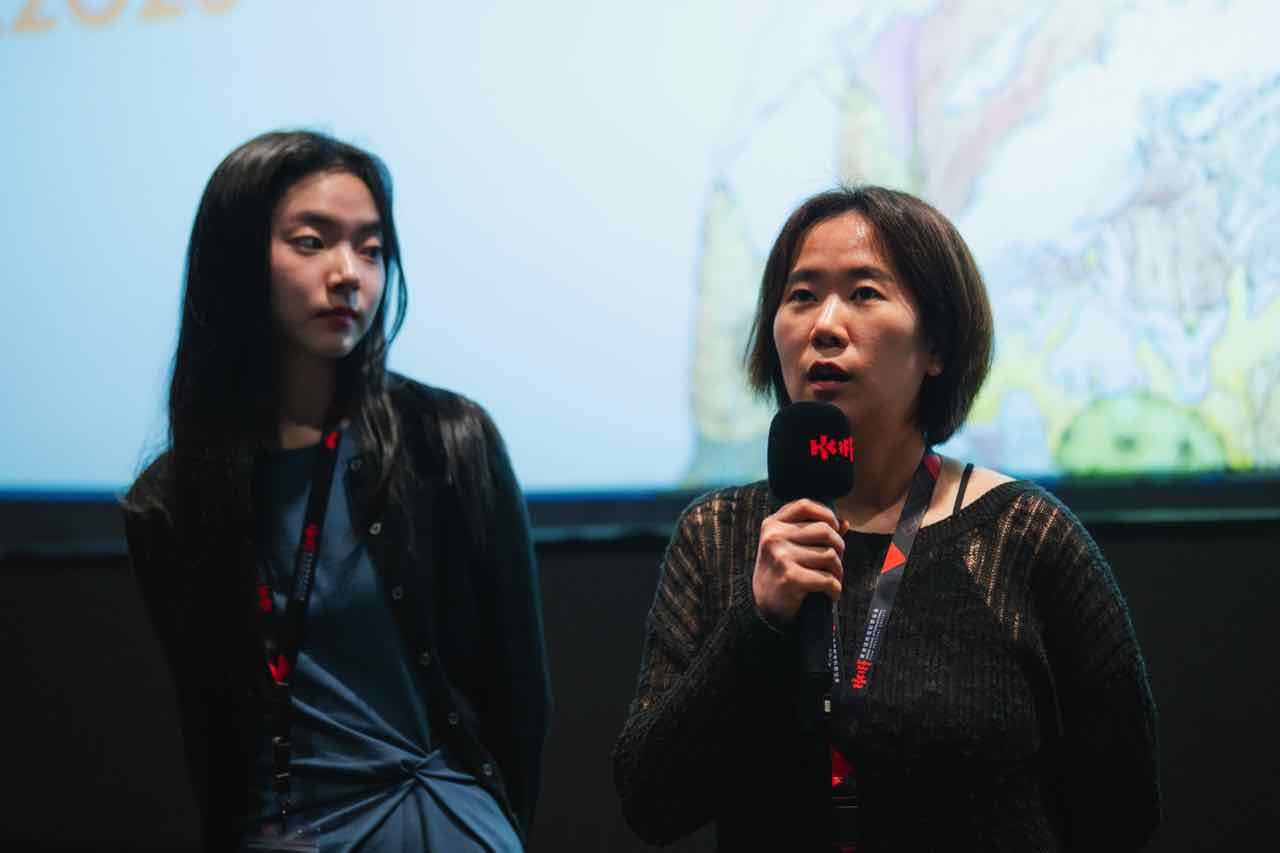
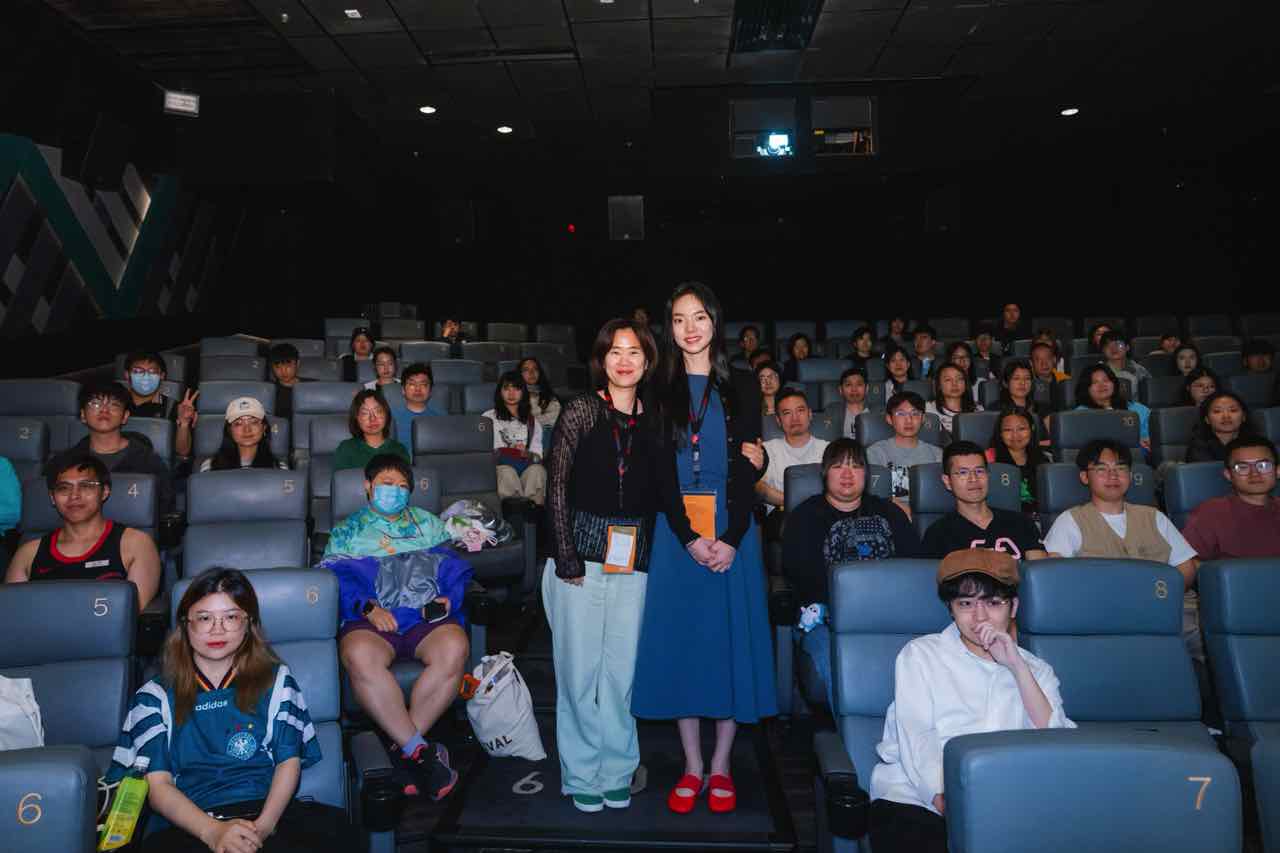
Following the film’s premiere at the Hong Kong International Film Festival, Cinema Escapist sat down with Yoo to talk about the inspiration behind En Route To, and the delicate topics Yoo wants to explore with the film.
• • •
What inspired you to tell this story?
I’ve always wanted to make a coming-of-age film about young girls. I’m interested in how they navigate what love is, how adult life is different, and how one’s actions and words differ from one another. I wanted to explore this confusing path through the perspective of young students, and [show] how they’re able to grow from it. To me, it’s important to show how varying situations change young people’s lives.
What was the process like in making your feature debut, after years of doing short films?
I did the short films by myself, and there wasn’t any collaborative process since they’re personal creations. But if I wanted to make a feature length, I wouldn’t be able to do it alone. That’s why I studied at the Korean Academy of Film Arts to learn how to create a longer film. The process was challenging because even the slightest change could affect production. There are more people involved when making feature-length films. I’d have to take their feedback into account. But I’m able to explore different concepts one by one and express them one at a time when making short films.
In addition to being the director, you also wrote the script and edited En Route To. How are you able to balance these different roles, especially as this is your feature debut?
It was a difficult journey. As this is my graduation film, I had to follow the rules, including editing the film. I initially believed that it would’ve been much smoother if someone with a more thorough editing background had edited the film. However, I acknowledged that the rule was set up because there’s no one who can express the story better than the director. So I did my due diligence and studied. I made mistakes along the way. There were challenges while shooting, and some failures too. But I learned a lot because of them, and I’ll be able to do better next time. I learned it the hard way. The film may seem a little rough, but I think it matches the rawness of the story.
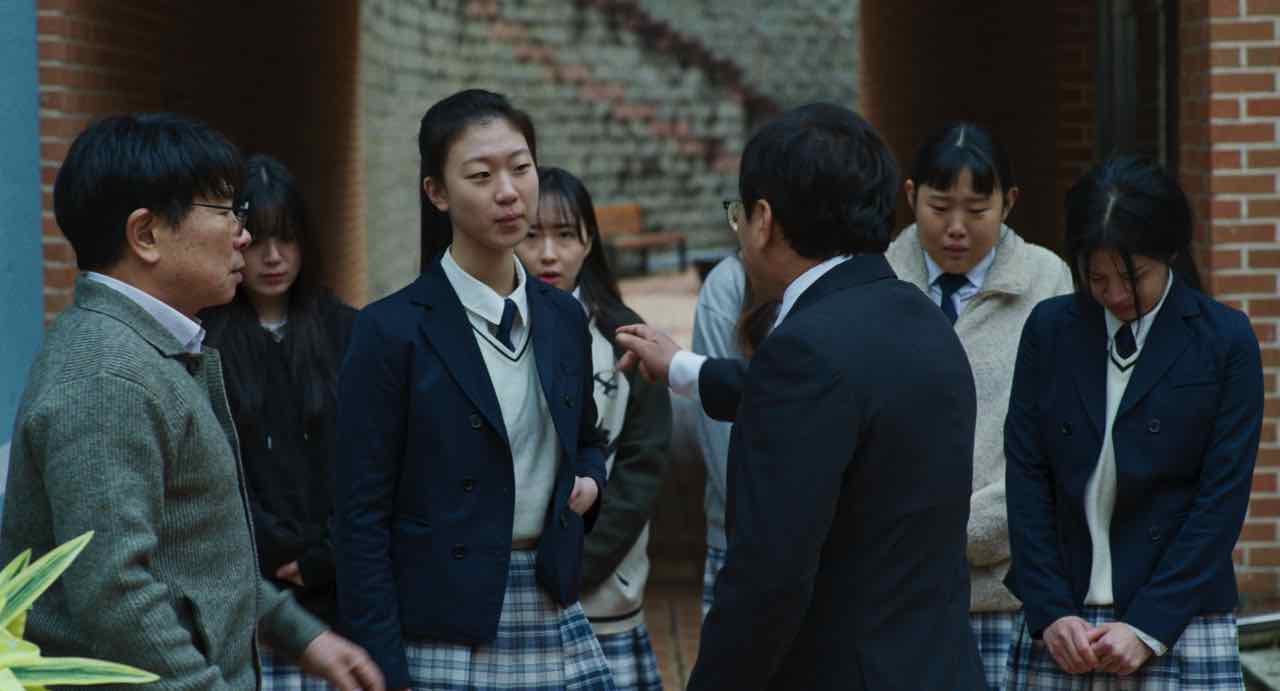
What was your approach in handling delicate topics like teen pregnancy and student-teacher relationships?
There are more and more films depicting such topics. I was hesitant to watch them while writing the script because I didn’t want my approach to overlap with others. These are serious issues, and most would likely similarly approach them with an equally serious atmosphere. But I looked at it from a personal perspective and tried to avoid expressing such ideas in such a shocking or traumatic way. I also wanted to lighten up some parts, so I added humour to show that there can still be something positive even during difficult times. That’s my own view of life as well.
Was it a deliberate choice to have the two main characters Kyung-sun and Yoon-ji, different in their personalities? Their unlikely friendship is interesting to watch since they’re so different.
I wanted Kyung-sun and Yoon-ji’s friendship to be an extension of society and community. People may usually be drawn to or befriend people who are similar and avoid those who are different. I believe it’s that difference that makes a society, when all our differences exist at the same time. The question is, “What kind of community should we become?” Do we set up boundaries, or should we break down all the walls and unite? I wanted to explore the connection, what it means to connect amidst the differences we all have.
What does the film tell us about society, particularly the way young women have to navigate the world?
People tend to be stuck in the past. They spend time thinking, “Why did I do this? Why did this happen to me?” and come up with answers. Maybe it’s easier to look back than look into the future because the future is unknown. We don’t know who we’ll meet or what will happen, so the fear is bigger than the possibilities and hope for the future. I tried to show how young women and teenagers navigate the kind of adult and person they will become.
Even in the case of Min-young, the teacher’s wife, she tries to defend her actions because she’s afraid of collapsing. But as the film progresses, she finally learns to let go, and it’s through this moment that she’s able to step into the future. I hope that we can all go forward in such a manner.
What do you want viewers to take away from the film?
We affect things and people around us, even as individuals. We can’t be by ourselves. The film reiterates this. The same lines are repeated from the convenience store clerk to the mom and the two friends that we affect one another and that we’re connected in some way. It shows that we aren’t truly by ourselves, but in a society where we should not curse but support each other.
The film also affects the viewers one by one. They all have their own thoughts and perspectives, and through that, they will affect others and the people around them. Through this film, we can connect in one way or another.
• • •

En Route To (Korean: 지우러 가는 길)—South Korea. Dialog in Korean. Directed by Yoo Jae-in. First released on September 19, 2025 at the Busan International Film Festival. Running time 1hr 48m. Starring Sim Su-bin, Lee Ji-won, Jang Sun.
This interview was originally conducted in Korean with an English interpreter. It has been edited for length and clarity.