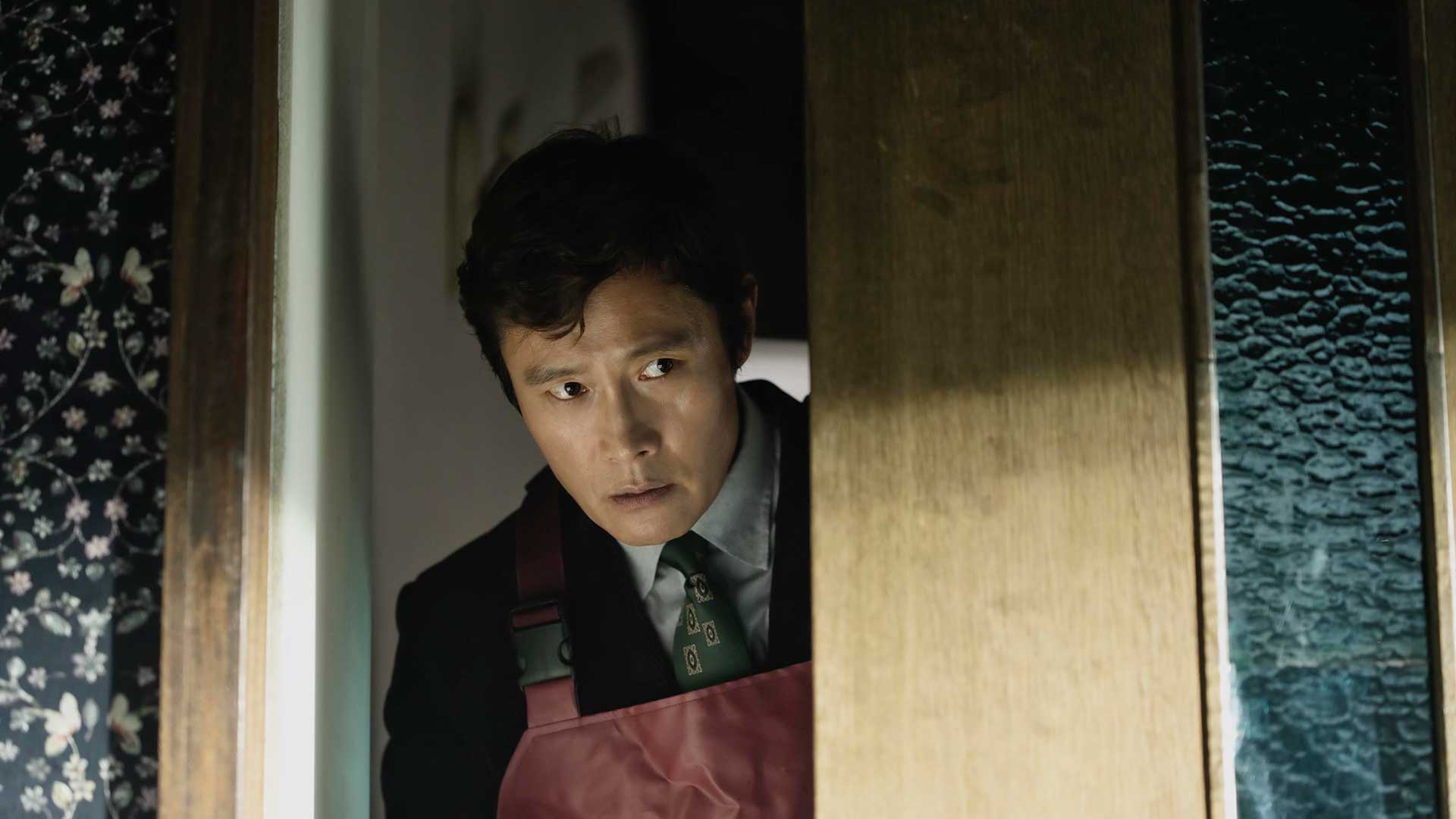
Park Chan-wook is a director who understands the mechanics of escalation. Whether he is building desire and intensity in The Handmaiden or diving into ultimate darkness with Oldboy, this legendary Korean auteur relishes in pushing his characters to the breaking point and seeing them unravel. In No Other Choice, he explores the desperation of an unemployed worker willing to use any means to get a job. The result is a film that is both darkly funny and harrowingly chilling.
This unique blend of grotesque violence and absurdist comedy is a trademark of many Park Chan-wook films. When asked about this at an “In Conversation” event during the 2025 Toronto International Film Festival, Park spoke about his early days as a director and being drawn to filmmakers like Kim Ki-young, a director during the Golden Age of Korean Cinema, known for his psychosexual and melodramatic films like The Housemaid and Woman of Fire ’82. “At the time, I liked movies outside of the mainstream,” says Park. “After realizing that there was a Korean filmmaker with the same taste as me, I started to grow my dream of becoming a filmmaker.”
No Other Choice has no shortage of violence or laughs. The film begins with Man-soo (played brilliantly by Korean superstar actor Lee Byung Hun) hugging his family. He seems to have it all: a loving wife, two great kids, two golden retrievers, a beautiful house, and a job that he loves. Since this is a Park Chan-wook film though, we know that this bliss is short lived.
The first thing to go is the job: after 25 years working for Solar Paper, Man-soo is unceremoniously laid off. As his family’s financial situation grows increasingly dire and new employment is hard to come by, Man-soo feels like his options are increasingly limited. With seemingly no other choice, he embarks on a plan to eliminate his competition… by any means necessary. It seems that, when it comes to job hunting, the process can be literally cutthroat.
The film’s title—“no other choice”—is repeated like a mantra by Man-soo as well as others, as if trying to absolve themselves of their decisions, convincing others that they had no responsibility for their actions. Yet, these actions have inevitable consequences, and Park allows them to unfold with delicious satisfaction.
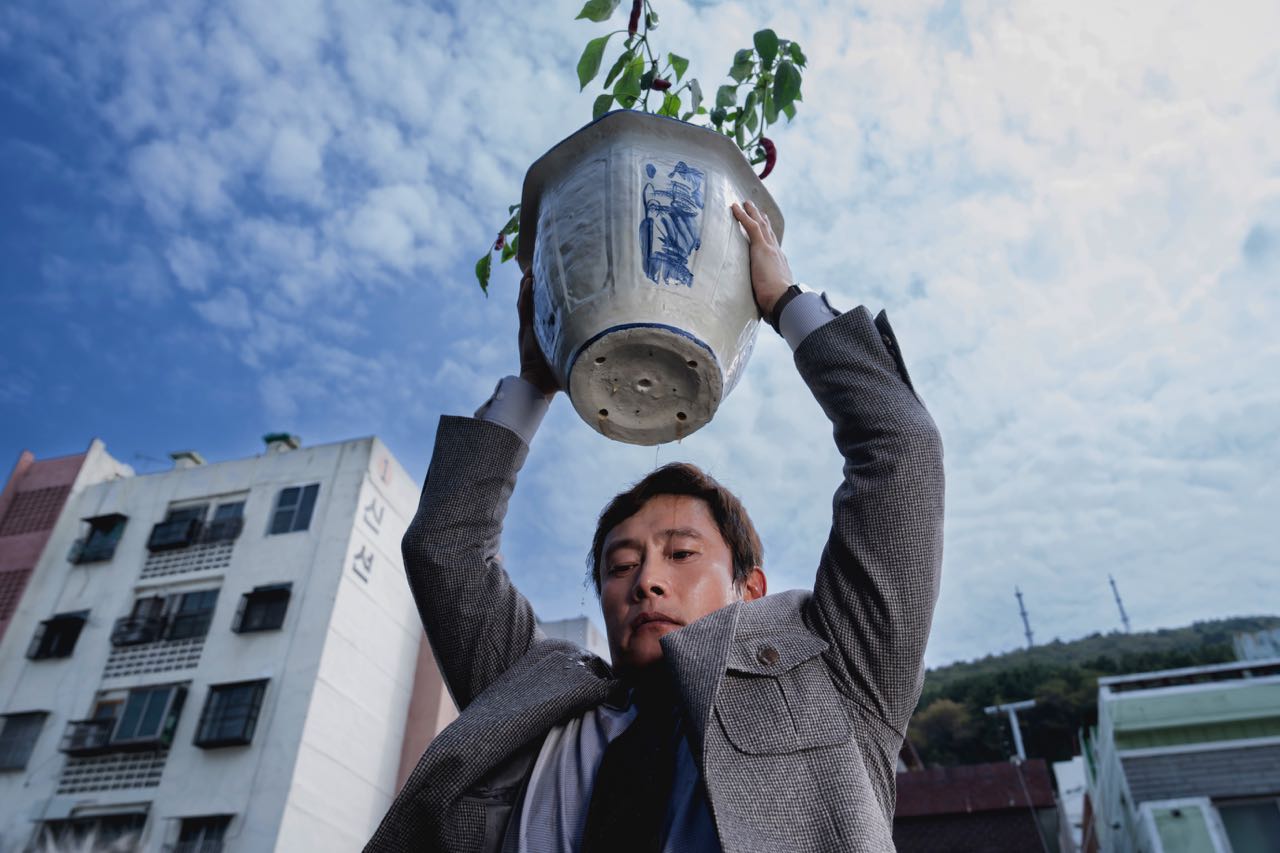
Written by Park, along with co-writers Lee Kyoung-mi, Jahye Lee, and Don McKellar, No Other Choice is nearly 20 years in the making. Park first decided to adapt Donald E. Westlake’s novel The Ax in the mid-2000s. However, the project did not start to come to fruition until years later, when Park began exchanging scripts back and forth with Don McKellar, the Canadian actor, director, and screenwriter. Director Park was attracted to the novel’s potential for humour, and he found a kindred spirit in McKellar. “A sense of humour is hard to pass linguistic and cultural barriers, but Don was different,” says Park. “My first idea was to add more comedy to the story, and then Don adds his sense of humour, and then Lee’s comical sensibility, so the dark comedy on the screen is a collaborative procedure.”
Balancing levity and darkness was essential for Park. “Because there is such a weight to [the film], it is such a heavy ethical dilemma, but as you read the script, you can’t help but smirk at the comedic situations,” says Park. “Because you are dealing with such a heavy subject, you have to make it even more comical and more humorous and that’s the only way to totally reveal how the world and human society works. The tragic absurdity of late capitalism is that it turns people who should be a community into enemies.”
No Other Choice may be Park’s funniest film, with excellent recurring gags like poorly timed video calls from Man-soo’s wife, Mi-ri (played by Son Ye-jin). However, while we laugh uproariously at Man-soo’s antics in the first half, things begin to darken as Man-soo’s plot unfolds. Soon, we go from laughing in earnest, to laughing in discomfort, and then eventually not laughing at all.
This tonal complexity is reflected in Lee’s performance. Speaking of the character, Lee says “for international film fans, you may remember me playing characters that are more dramatic or distant from reality, but I actually prefer characters that are more of an average man who is put in a dramatic circumstance and then delicately portraying the changes they go through. In [No Other Choice], these circumstances were overly dramatic, so I focused on how to continuously keep the audience empathizing with the emotions of my character.” As the film escalates, maintaining this level of connection is challenging. Says Don McKellar, “[Man-soo] is an everyman, but his actions become increasingly not everyman type actions. To maintain empathy, but to allow us the distance, it was very difficult. It really is a masterful performance.”
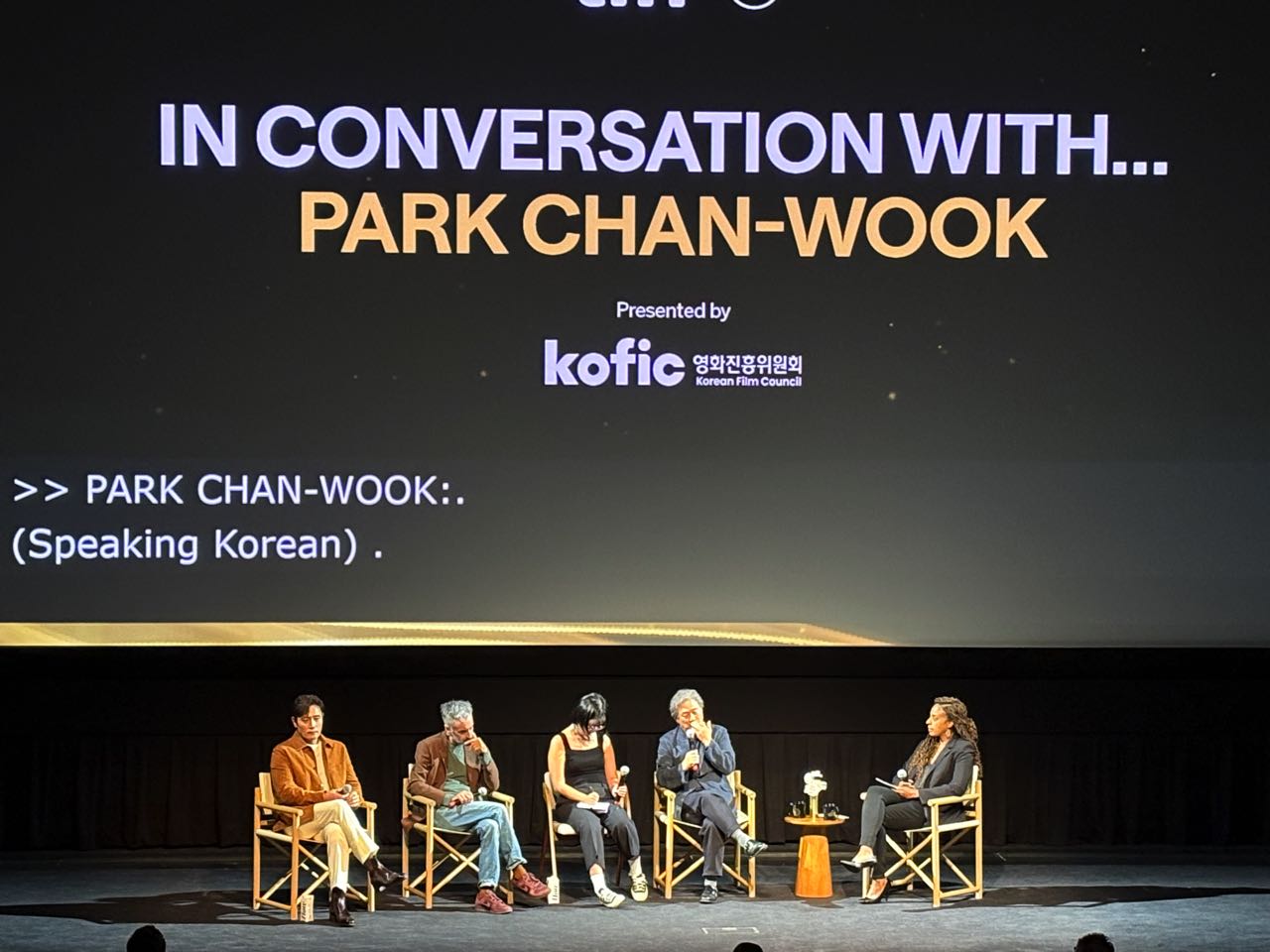
Park Chan-wook also spoke about wanting to make films that appeal to a global audience, after seeing the success of Korean content like Squid Game and Parasite. Comparisons to Bong Joon-ho’s Parasite are perhaps inevitable, and not just because they are both top tier films from icons of contemporary Korean cinema. Both Parasite and No Other Choice are darkly satirical films about life under capitalism that start comedically before veering into darkness, both centered on a house, and featuring working class people willing to go to extremes to move up the economic ladder.
Whether No Other Choice reaches Parasite’s levels of success remains to be seen. What is clear is that No Other Choice is a tonal masterpiece and one of the best screenplays of 2025. Told with Park’s usual visual virtuosity and stylistic flair, it is a chilling satire on how our economic structures reward mercilessness. The film may be set in Korea, but its themes—economic anxiety, status obsession, moral compromise—are global. This tension is part of the film, says Park: “It may look funny from other people’s perspectives, but, to the character himself, he is just desperately trying to survive and is in a tragic situation. That is what black comedy is.”
• • •
No Other Choice (Korean: 어쩔수가없다) — South Korea. Dialog in Korean. Directed by Park Chan-wook. Running time 2hr 19 min. First released August 29, 2025 (Venice). Starring Lee Byung-hun, Son Ye-jin, Park Hee-soon, Lee Sung-min, Yeom Hye-ran, Cha Seung-won.
This article is part of Cinema Escapist‘s dedicated coverage of the 2025 Toronto International Film Festival.