
A decade after Train to Busan made a splash as the most celebrated zombie thriller in Korean cinematic history, director Yeon Sang-ho has returned with Colony, his fourth zombie movie to date. Unlike his 2016 animated feature Seoul Station and his 2020 live-action blockbuster Peninsula, Colony is not a sequel to Train to Busan. However, the film serves as a spiritual cousin; it even premiered in the Midnight Screenings section of the 2026 Cannes Film Festival—the same slot where Train to Busan debuted back in 2016.
This symmetry raises a natural question: Is Yeon still pushing the filmmaking envelope, as he did with Train to Busan and earlier animated features (not just Seoul Station but also 2013’s The Fake), or is he simply coasting on the momentum of his decade-old zombie blockbuster? After Peninsula stumbled while chasing Michael Bay-esque, Hollywood-scale spectacle, Colony provides a mixed response to that inquiry. While the film evokes the social commentary and claustrophobia of Train to Busan, it also injects larger-scale action elements reminiscent of Peninsula. Ultimately, Colony prioritizes inventive zombie behaviors over deep emotional impact, yielding an entertaining but not particularly memorable result.

Colony begins when biologist Kwon Se-jeong (Jun Ji-hyun, in her first film role in over a decade) is invited by her ex-husband to a product presentation for Chains Bio, a company run by CEO Kang Woo-chul. Uninvited, Seo Yong-chul (Koo Kyo-hwan)—a former Chains Bio researcher with a grudge against Kang—also attends. Seo infects Kang with a bioweapon based on mutated slime mold, making him patient zero of an outbreak that quickly consumes the building where the presentation is held, though police manage to seal the facility before the infection spreads further.
What follows is familiar Yeon Sang-ho territory—a small group of survivors finding each other in a contained environment, scrambling toward a vague hope of safety while thwarted by enemies both undead and living—but with a novel twist. In Colony, the zombies don’t just bite and chase; they network. Through a mycelium-like substance spreading across walls and bodies, they share sensory data and “upgrade” collectively, evolving from lurching threats into coordinated swarms that can manipulate weaponry. It’s a mutation of the genre that vaguely evokes The Last of Us and positively distinguishes Colony from Train to Busan.
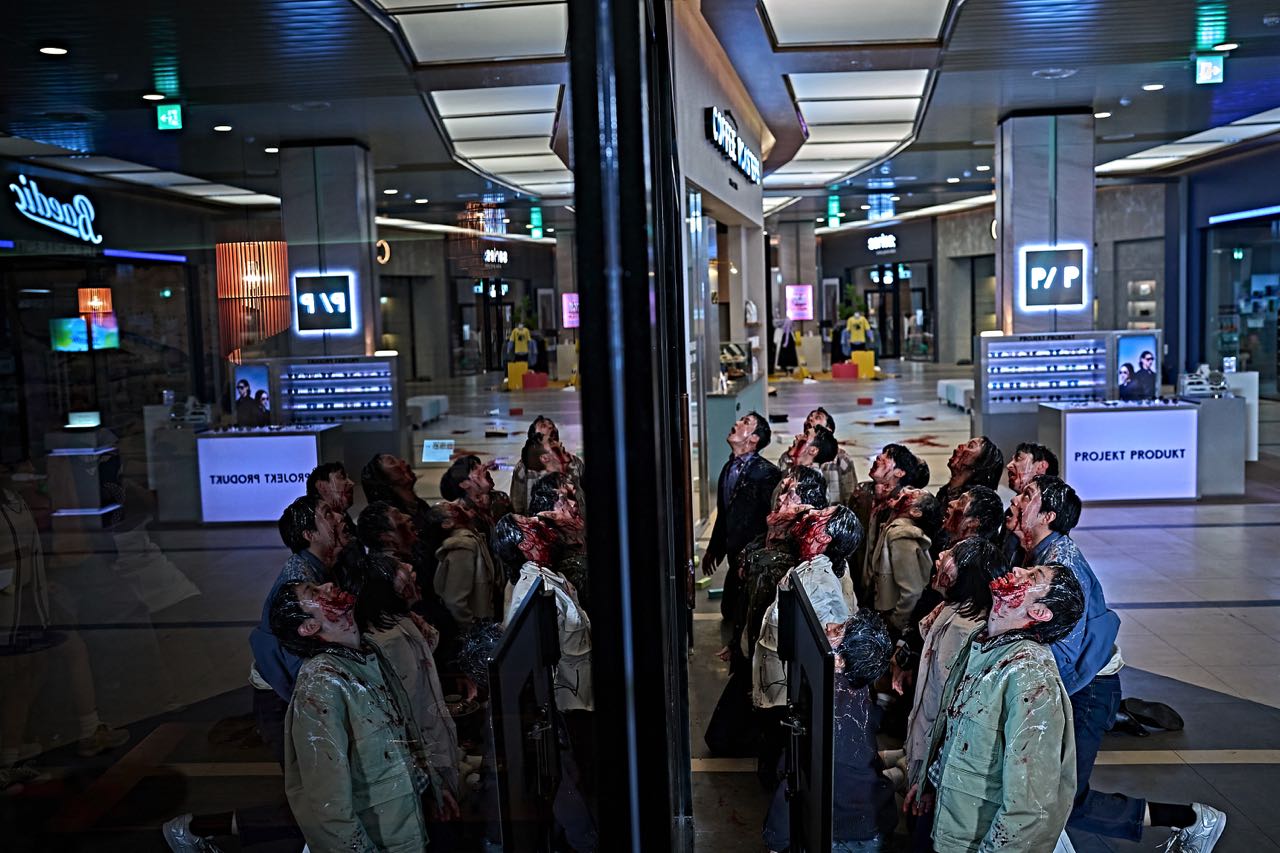
Yet, Colony performs best when it remains claustrophobic, similar to how the train-borne setting of Train to Busan created a pressure cooker that fueled both inventive action and high-stakes character decisions. As characters navigate floor-by-floor in search of safety, Colony offers a solid string of tension-filled scenes: Kwon disguising the survivors’ scent with perfume to slip past the horde; a security guard (Ji Chang-wook) slashing through zombies in tight hallways; and a half-infected SWAT team turning on its comrades in one of the few scenes in any film that features gun-wielding zombies. However, without spoiling too much, Colony strays from these physical constraints in its final act. With certain ambitious set pieces, the film sinks into the overwrought spectacle that infected Peninsula, and imbues Kwon Se-jeong with a laughable amount of plot armor.
In fact, Colony’s biggest flaw is failing to learn from the emotional architecture that made Train to Busan resonate beyond zombie genre fans. Train to Busan featured Gong Yoo in a memorable role as a father trying to bond with his daughter—a dynamic that gave the movie its heart and created emotional momentum that carried through to its end. Even the secondary characters—most infamously the “asshole businessman” Yong-suk—had personalities and arcs rich enough to spark lively commentary among moviegoers worldwide.
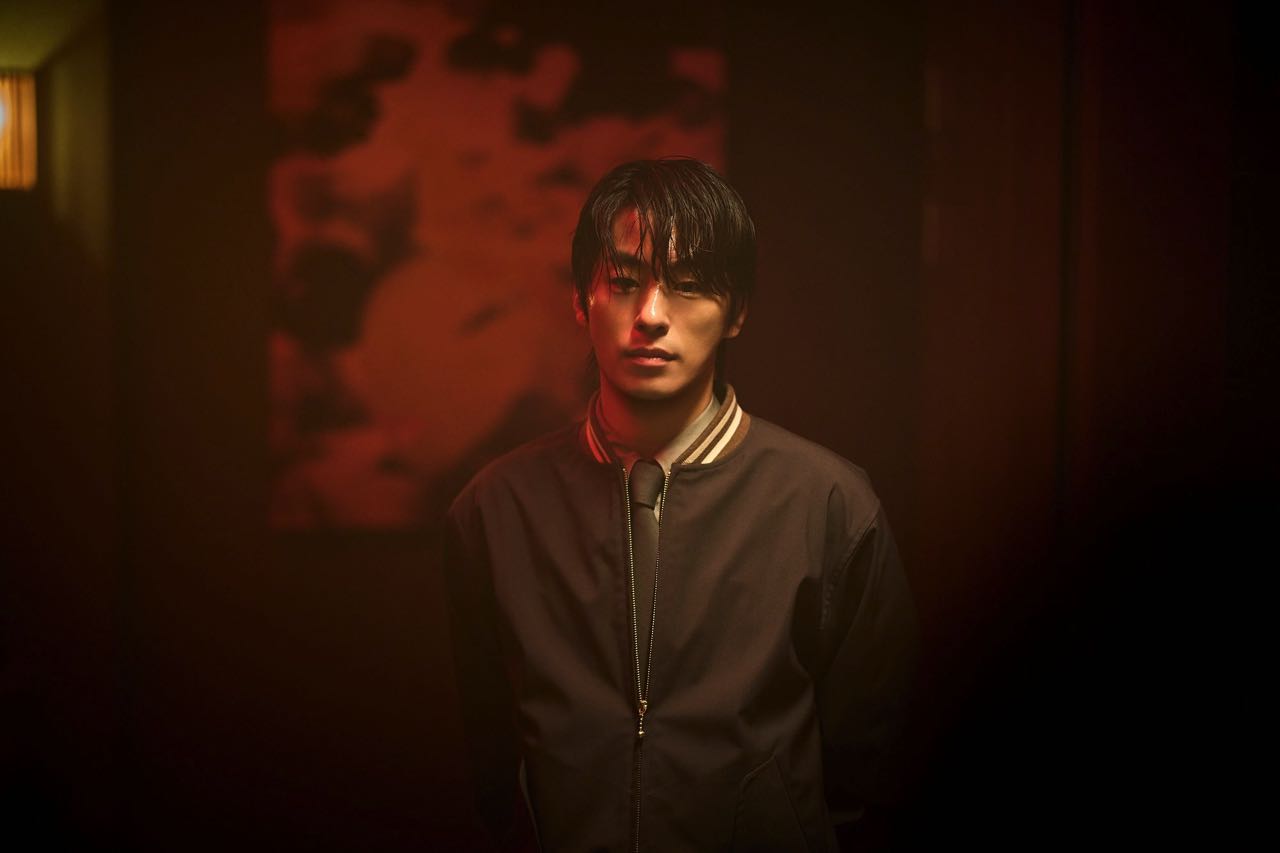
Colony’s characters, on the other hand, lack that resonance. Kwon Se-jeong’s character arc feels flat: there is no “save the cat” moment early on to help the audience latch onto her, she lacks a meaningful equivalent to the “daddy-daughter” dyad from Train to Busan, and she does not seem to change in any substantial way by the film’s end. The secondary characters also feel like hollow imitations of those in Train to Busan, with another “asshole businessman” playing a minor role among the survivors. Seo Yong-chul has the most potential as a villain, but this goes to waste. His motivations are shallow, and the revelation of a connection between Seo’s father and Kwon Se-jeong lands too late and is shown so briefly that it fails to spark meaningful tension.
Ultimately, while Colony may be worth a watch for its novel “zombie network” concept and action, it does not reach the same heights as Train to Busan or Yeon’s earlier works. One wonders if this is yet another instance of malaise in post-COVID, post-Parasite Korean cinema, which—aside from gems like No Other Choice and Decision to Leave—has seen filmmakers adopt a “peak Marvel” era Hollywood penchant for sequels and franchises.
• • •

Colony (Korean: 군체) — South Korea. Dialog in Korean. Directed by Yeon Sang-ho. Running time 2hr 2min. First released May 15, 2026 at the Cannes Film Festival. Starring Jun Ji-hyun, Ji Chang-wook, Koo Kyo-hwan, Kim Shin-rok, Shin Hyun-been, Go Soo.
This article is part of Cinema Escapist‘s dedicated coverage of the 2026 New York Asian Film Festival. Colony screens at the New York Asian Film Festival on July 10, 2026 and has a broader North American theatrical release starting August 28, 2026.