
Minotaur is not the first time that Russian director Andrey Zvyagintsev has made a film critical of the current Russian administration. In fact, his 2014 film Leviathan was criticized by the Russian Minister of Culture and denounced as “anti-Russian” by pro-Kremlin figures. This time, however, Zvyagintsev approaches the critique through a new angle: an extramarital affair.
Set in wartime Russia in 2022, Minotaur is centered on Gleb (Dmitriy Mazurov), a successful business executive with strong connections to local political figures. In the aftermath of the Russian invasion of Ukraine, Gleb is ordered to decide which employees he wants to send for conscription into military service. It is a difficult situation to begin with, made all the more challenging by the discovery that his wife Galina (Iris Lebedeva) is having an affair. As Gleb begins to look deeper into this affair and take matters into his own hands, the thin bubble of control that he had over his life threatens to burst completely.
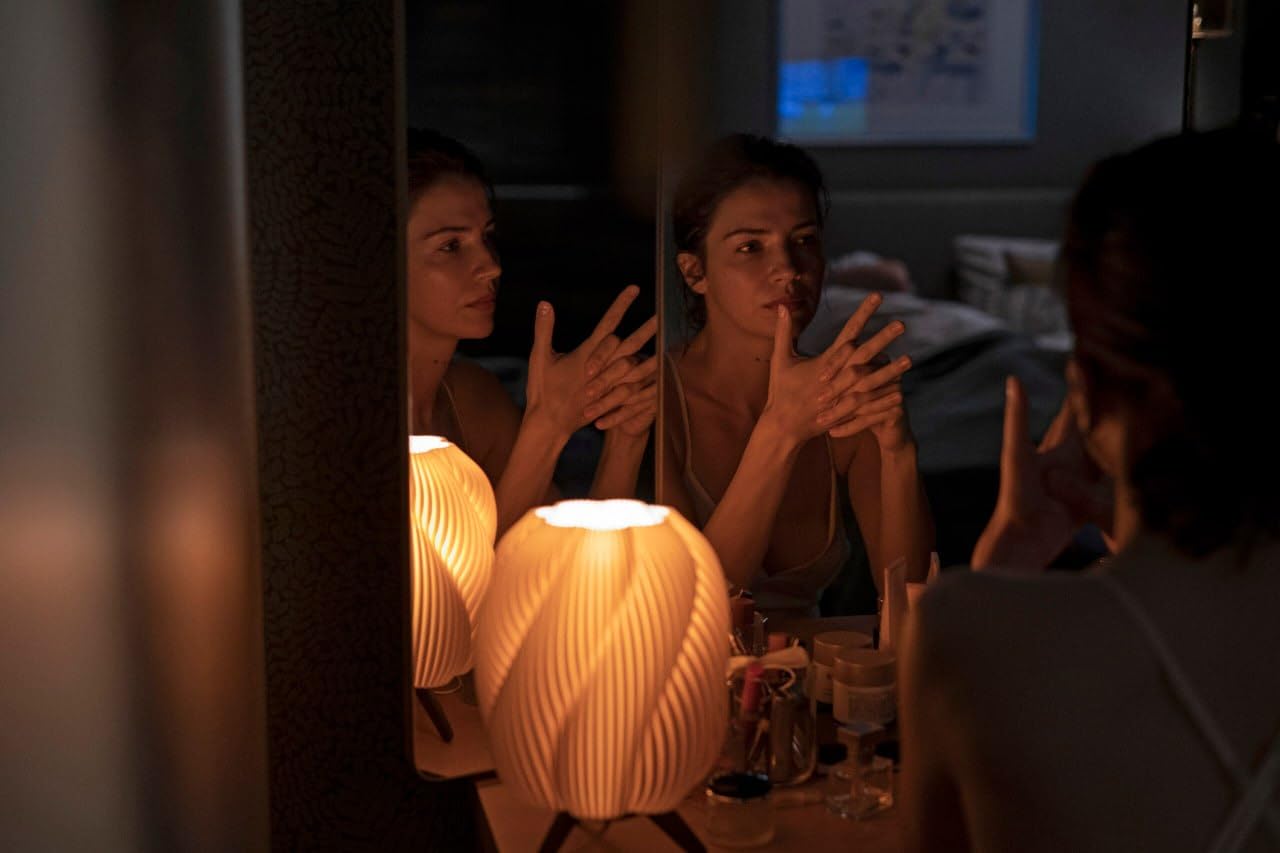
Minotaur’s story may feel somewhat familiar—its plot was adapted from Claude Chabrol’s 1969 French erotic thriller The Unfaithful Wife, which also spawned Adrian Lyne’s 2002 American movie Unfaithful starring Diane Lane. However, while Minotaur’s storyline might draw from those predecessors, Zvyagintsev strips away the eroticism and replaces it with the raw reality of corrupt power structures in contemporary Russia.
Shot entirely in Latvia rather than Zvyagintsev’s native Russia for obvious reasons, Minotaur is clinical and bleak, confronting the systemic issues of wartime Russia both directly and allegorically. Zvyagintsev’s direction is cold and calculated, with a detached emotional tone and measured pacing. At times, the slow pacing works in the film’s favor, such as to build tension during a meticulous cleanup scene that happens in real time. However, other moments feel unnecessarily drawn out, especially during some of the narrative table setting in the first hour.
In a similar vein, Mazurov delivers a performance as Gleb that oscillates between complexly layered and curiously muted, often seemingly unphased by many of the stressful events that surround him. This may be intentional, representing how those in power under Putin’s regime can be numb to the realities of what is going on around them, or it may just be a limitation of his performance.

Winner of the Grand Prix award at the 2026 Cannes Film Festival, Minotaur is receiving wide acclaim, partly due to its willingness to grapple directly with the realities of wartime Russia, including issues of violence and political corruption. Placing domestic strife in the context of the Russo-Ukrainian conflict adds a level of thematic heft to an already rich story. In Zvyagintsev’s interpretation, the web of deceit and emotional fallout of an affair are secondary to the systems of power where individuals are dominated, corruption prevails, and the powerful are shielded from the consequences of any wrongdoing. Once the credits roll, the title Minotaur will leave the viewer questioning: who is the real monster?
• • •
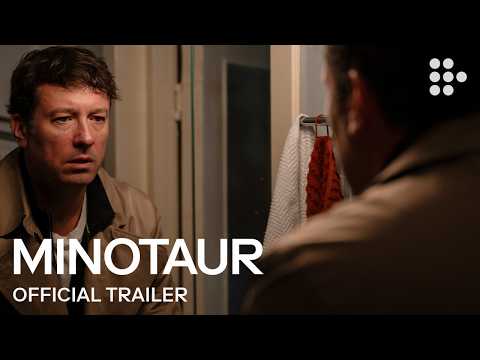
Minotaur (French: Minotaure)—France, Germany, Latvia. Dialogue in Russian. Directed by Andrey Zvyagintsev. Running time 2 hour 15 min. First released May 20, 2026 at the Cannes Film Festival. Starring Dmitriy Mazurov, Iris Lebedeva, Boris Kudrin, Yuriy Zavalnyouk, Varvara Zmykova, Vladimir Friedman.
This article is part of Cinema Escapist’s dedicated coverage of the 2026 Vancouver International Film Festival.